
|
|||||||




 |
|
|
|
 |
|
 |
||||||||||||||
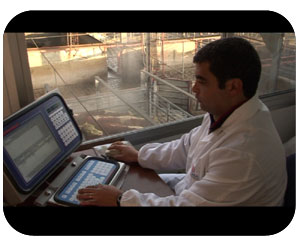
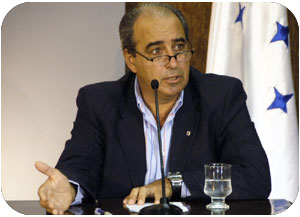
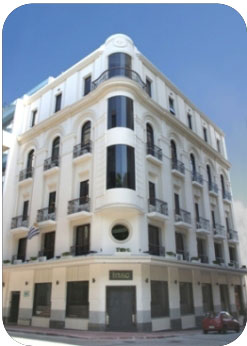
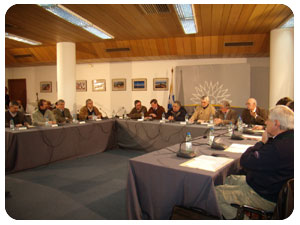
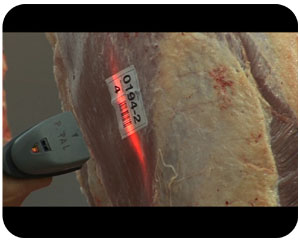
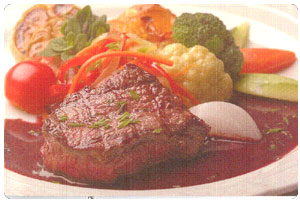
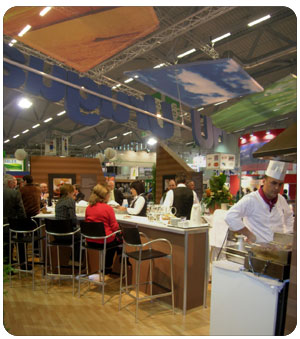
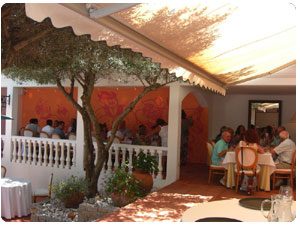
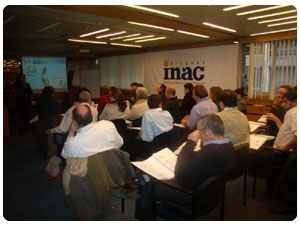
The National Meat Institute (INAC) is a non-governmental public body created by Decree-Law No. 15,605, dated July 27th, 1984. Its object is to suggest and advice the Executive Power on the National Meat Policy, as well as to execute said policy, established by the Executive Power. As of 1967, two important institutions came to exist in the meat sector: INAC (National Meat Institute), and another institution named CADA (Comisión Administradora de Abasto – Domestic Market Management Commission), which operated until 1984, both of them complementing each other’s tasks, duties, objects and efforts. INAC mainly focused on exports, and CADA mainly focused on the domestic market. President of INAC, Dr. Alfredo Fratti. When I took office at INAC, I found and Institution with an extraordinary technical level, with extremely valuable information, and which few people knew about, even within the governmental sphere. The country has made little use of this Institution that is 40 years old, and which has reached a unique level of specialization as regards quality controls, promotion, monitoring of trade and transport of meats, particularly of beef, and sheep meat. INAC 41 years later The creation of INAC introduced a fundamental change in the meat sector. Mission: INAC’s mission is to develop joint actions that promote activities and formulate policies which add value to the meat chain, and contribute to its socio-economic development. Vision: INAC’s vision is to position the Uruguayan meat chain as a supplier of quality products, renowned for controls applied to its processes, and for its adaptability to fit consumers' demands. According to Law 15,605, INAC's role is to suggest and advice the Executive Power on the National Meat Policy, as well as to execute said policy, established by the Executive Power. Coordination with the latter is done through the Ministry of Livestock, Agriculture and Fisheries (MGAP). Section 1. *Taken from Analysis of the current situation of non governmental public bodies linked to the MGAP. August 2007. Institutionality The decentralization promoted by the Ministry of Livestock, Agriculture and Fisheries officially began activities in 2007, after the passing of Law 18,126 – Law of Decentralization and Coordination of Agricultural Policies on a Departmental Basis. This law created three bodies: the National Agricultural Council, Departmental Agricultural Councils, and Rural Development Committees. The Agricultural Council, chaired by the Minister of Livestock, is also composed of the Director of the Office of Planning and Budget; three members of the Mayors Congress; the chairmen of INAC, Instituto Plan Agropecuario (Farming and Agricultural Planning Institute), Instituto Nacional de Investigación Agropecuaria – INIA (National Agricultural Research Institute), Instituto Nacional de Vitivinicultura –INAVI (National Wine Institute), INASE Instituto Nacional de Semillas (National Seeds Institute); and a representative of Instituto Nacional de Colonización -INC (National Colonization Institute). In the framework of the decentralization policy, INAC appointed two technicians, who take part in Departmental Agricultural Councils at Flores and Cerro Largo, Veterinarians Andrés Lapetina and Mariana Lizasuain, who strengthen the decentralization policy established by the government. Uruguay, cattle-raising country Uruguay is one of the main meat producers in the world. Almost 100,000 people share the environment with livestock. Uruguay ranks second worldwide in beef consumption per capita, with 53 kg per person per year. It produces about 600 thousand tons of beef a year, 150 thousand tons are consumed in the domestic market, and 450 thousand tons are exported. In order to achieve these goals, our country has designed the best livestock information systems in the world: Traceability + Electronic Information System of the Beef Industry. Investing in technology has a specific object: to know more about natural cycles, and learn more and more how to follow them; to this end, information society tools being taken advantage of. These achievements, added to the health status attained by Uruguay, and to the quality of its products, have boosted Uruguayan meats in the most demanding markets. INAC was created with a view to provide precise and up-to-date information about industrial and trading activities of the national meat chain. At that time, in the late sixties, several institutional initiatives aimed at knowing Uruguay better as a country, in order to achieve a harmonic development that combines its agricultural vocation with the necessary industrialization of products. Times were difficult at first; results were modest when there were no computers and working with data demanded strong efforts, both on the part of companies and of the part of INAC. Throughout the years, the task has improved little by little thanks to the efforts of the authorities, who understood its importance, and to technicians who have devoted efforts and skills to the ongoing improvement of data. Average value of the standard steer index. Amongst its essential duties, INAC must promote coordination mechanisms among the links of the meat chain to find business alternatives that add value to products. It is with this purpose that INAC publishes the average value generated after the industrial process by a standard Uruguayan steer – British breeds and its cross breeds. SEIIC. Electronic Information System for the Beef Industry. Uruguay is the first country in the world to implement an electronic information system at slaughter plants, managed by the advising body on meat policy integrated by the Executive Power, and representatives of farmer and processor unions. Through digital scales, computers and other devices, data gathered at plants are registered and transmitted to INAC. Accessing the most demanding markets requires a lot of work in safety measures. Therefore, meat certification allows us to ensure that products obtained throughout a series of stages are under control. Besides from animal health and meat safety, certification also allows plants to meet specific commercial requirements from customers. From the beginning, certifications have been issued for final products. Therefore, since 30 years ago, Uruguay has been guaranteeing a minimum level of commercial quality for all of its meat exports through the Official Certification of Quality Control. Product certification requirements were becoming more and more demanding as to the industrialization process itself, therefore, besides from final products, the final stages of said process—slaughter conditions, refrigeration, deboning— were also included in certifications. Finally, in recent years, requirements from markets and from final consumers have begun to aim firstly at the farm production level, then at livestock shipment and transport, and also at the industrial stage, up to the final product. Thus, implementing a traceability system, both for cattle and for beef, becomes an indispensable tool to grant these kinds of certifications. Optional certifications, these being understood as certifications required by specific markets, which the Institute issues for exporters on their demand; it is the case of beef certification required by the Chilean government to ensure the fulfillment of requirements established by Chilean standards. Voluntary certifications, these are the ones that INAC, in ongoing search for better opportunities to place Uruguayan meats in markets around the world, issues as a differentiation tool. These certifications are issued under Meat Certification Programs (MCP). By decree 215/006 dated July 2006, the composition, preparation, and handling of ground beef were regulated, together with the physical chemical and microbiological standards it has to meet in order to be sold to consumers, with a view to homogenize the product and defend consumers. Likewise, a photographic pattern was prepared with ground beef containing different fat percentages, in order to be placed at butcher shops as a guideline for consumers. On the other hand, considering there was no solid-based method for the calculation of meat consumption in the domestic market, and therefore, for the calculation of per capita consumption, INAC developed a clear and accessible methodology to calculate meat consumption per capita. According to INAC’s estimates, meat consumption in Uruguay is of about 53 kg per person a year (bone-in), one of the highest numbers in the world, it only being beaten by Argentina’s. This makes the monitoring of the domestic market consumption to become fundamental with a view to help establishing a public policy that ensures access to animal protein for the greatest number of people. Winning choice In the last decade exports have been the dynamizer of the meat chain. Among the most important destinations of recent years there are Nafta’s markets, particularly the USA. Achieving stable and profitable trading channels is a long term task that has to be continuously supported by INAC, and INAC’s role is very important. The Institution uses positive messages, linked to connecting oneself to what matters – the nature, a healthy lifestyle, and a great taste to share, such as that of the Uruguayan meats. It is in this framework that INAC participates in the most important food exhibitions around the world, organizes different kinds of events which include meat tasting, negotiating tables, presentations to customers, etc. Special projects: Uruguay Natural. A tour through the senses. Its object is the joint promotion of meats, wines and tourism in Uruguay as natural and safe products. INAC, INAVI (National Wine Institute) and the Ministry of Tourism and Sports have joined efforts to work on this project. Advantages of joint promotions are: lowering marketing costs, adding positive synergies and multiplying communication - chef contests in Punta del Este, International Golf Exhibitions, etc. Uruguay Natural Club. Its object is to promote Uruguayan natural meats abroad, in the market segment demanding high-quality products. The means used to achieve said goal is the implementation of different restaurant models. The project’s strategy aims at encouraging people who appreciate high-value proposals to –live an experience-, thus they being attracted -by the natural attribute - to discover Uruguay little by little, as well as its values, culture and traditions. |
|
|||||||||||||||




|
|
|
Make World Investment News Your Homepage. |