SEO Version



www.ebizguides.com
146
Real Estate and Construction
As mentioned before, because of the huge cost of
conservation and reconstruction brought on by the
implementation of surface layers with Flexible Pave-
ment (asphalt mixtures), the Government decided
to launch the country’s road reconstruction with the
use of surface layers with rigid pavements. Despite
requiring high initial investment costs, it brings eco-
nomic benefits in the long run:
- Longer lifetime (more than 30 years)
- Lower cost of maintenance of their structure
BRIDGES
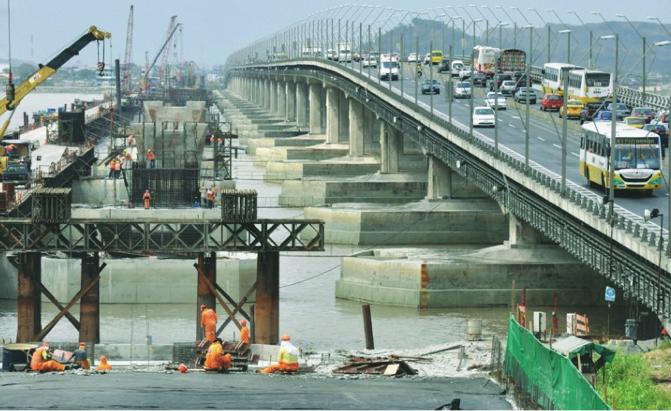
Full connectivity of the network has also been the
decision of the current administration. The following
large scale projects are being under construction:
- Chone Estuary Bridge (also known as the Bridge
between Bahia and San Vicente): this is the largest
bridge of the country with a length of two kilometers
and it was built by the Army Corps of Engineers.
- The Fourth Bridge (over the river Babahoyo): 1975
mts long, the second largest
- Bridges over the Esmeraldas River Estuary: 3
bridges, with 850 mts.
- Yacuambi River Bridge
- Coca River Bridge
- Napo River Bridge
- The Fifth Bridge (Guayas)
AIRPORTS
Within its ambitious policy to build and rehabilitate the
country’s infrastructure, the Government is determined
establish connections between different provinces
through new airports such as Santa Rosa, near the bor-
der with Peru, or Lago Agrio in the Amazon.
Likewise, the government has ambitious plans for the
Manta airport, a former U.S. airbase, which is the most
western point of Ecuador and a perfect spot to connect
the country with Asia, thereby becoming the gateway
to Latin America. Moreover, in the same city of Manta
a deep-water port is being built, creating a pole of eco-
nomic development.
What is more, both cities Quito and Guayaquil are plan-
ning to build new airports, being the new airport of Quito
at a very advanced stage.
The new terminal of the International Airport of Guayaquil
was built in 2006
Powered by FlippingBook Publisher