SEO Version


17
www.ebizguides.com
General Information
Government structure
Ecuador is governed by a democratically elected
President, for a four year term. The current president
of Ecuador, Rafael Correa, exercises his power from
the presidential Palacio de Carondelet in Quito. The
current constitution was written by the Ecuadorian
Constituent Assembly elected in 2007, and was
approved by referendum in 2008.
The executive branch includes 28 ministries. Provincial
governors and councillors (mayors, aldermen, and par-
ish boards) are directly elected. The National Congress
of Ecuador meets throughout most of the year except in
the occasion of recesses in July and December. There
are 69 congressional committees. Justices of the Su-
preme Court are appointed by Congress for indefinite
terms.
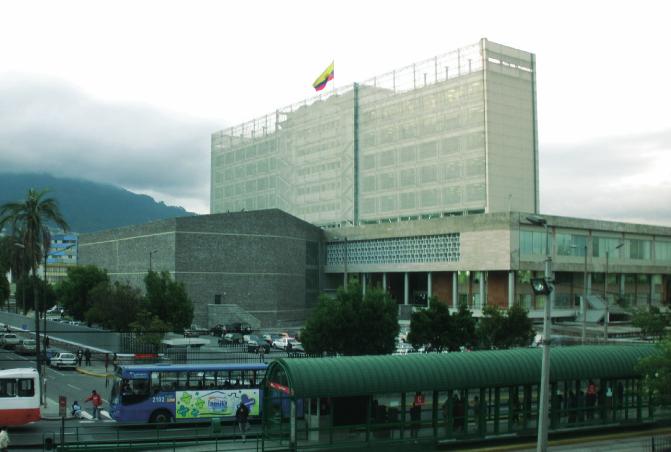
The National Parlament of Ecuador in Quito
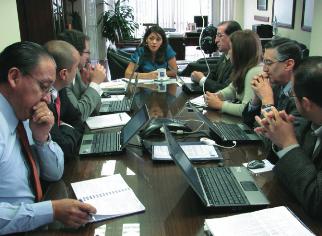
Government and its Institutions meetings are frequent
Source: CONELEC
Foreign Affairs / Foreign Policy
External relations have been marked by regional
integration. Two events of particular importance for
Ecuador have been the creation of Banco del Sur,
which was founded in the Declaration of Rio de Ja-
neiro as a Regional Development Bank and had a
key role in developing new projects such as regional
currency and the promotion of the Southern Union.
Furthermore, Ecuador returned to the OPEC in
2007 after 15 years of absence and signed sev-
eral cooperation agreements with Venezuela on
energy.
Ecuador started 2008 by opening a number of geo-
economic development policies. In recent years
Ecuador has continued to strengthen and develop
relationships with Asian countries such as China,
Japan, Korea, Singapore and also with Russia in
its most strategic sectors.
Powered by FlippingBook Publisher