SEO Version



www.ebizguides.com
204
Transport
OVERVIEW
Ecuador has one of the most functional and
effective transport networks in Latin America as
a result of its rapid modernisation and growth in
a very short time.
The transportation sector, being one of the
most important activities within the process of
consolidation of the economic system, contributed
$1.800 million USD to the GDP of Ecuador. The
most recent statistics registered around 905 000
vehicles in Ecuador, 95% of them for personal
use.
AIR TRANSPORT
Passenger transport:
You can take a flight between major cities like
Quito, Guayaquil, Cuenca, but also other cities in
the country thanks to the new airports that have
been built in the last years. The air system is
the most efficient, more so than in other Andean
countries, and, being a relatively small nation, it
is also cheaper. As a result, domestic flights are
relatively frequent in Ecuador.
During 2009, 1,324,121 passengers entered the
country, according to the statistics provided by
the airports of Quito and Guayaquil, of which
more than half, 59% did it via Quito and 41%
via Guayaquil. In the same year, 1,282,631
passengers left the country, of which 56% did it
from the airport in Quito and 44% from Guayaquil.
The main airports of the country are Quito
International, which is about 10 km north of the
city, and Guayaquil, which is 5 miles north of
central Guayaquil. Their proximity to the city
makes taxi and bus services quite frequent.
Evolution of air transport:
The CNAC, as a regulatory board, has succeeded
in ensuring that their air policies are synchronised
with global regulations. These rules were
demanding and strict, with the aim of providing safe,
competitive, cost-effective and environmentally
friendly services.
These policies led to an increase in consumer
confidence, which was directly reflected in the
sustained economic growth over the years of 2008,
2009, and 2010.
Demand for domestic services has increased
2,25% between 2007 and 2009.
International services grew by 7,05% in 2008, and
the tendency continued with a 9,97% growth rate
registered in 2009.
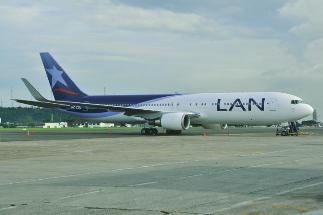
The domestic aviation market changed in 2009
with the incorporation of LAN. This airline began to
compete with Tame, Aerogal, Icarus, Saéreo and
VIP, becoming the second most important after the
leader TAME and in front of Aerogal, a firm that now
belongs to the AviancaTaca Group.
In 2009, a total of 3.329.457 passengers used
internal routes compared to 3.579.014 in 2010,
showing a growth of 7,50%. The three most popular
routes were: Quito ti Guayaquil ( 47,49%), Quito to
Cuenca (10,59%) and Quito to Coca( 5,25%). All
other routes counted for 36,67 %.
Many international companies increased their
Railway Station Kumasi, 2005
There are many flying destinations within Ecuador,
including the city of Coca in the Amazon
Cargo Transport:
The main product transported by air cargo is flowers.
These are flown predominantly from Quito.
Powered by FlippingBook Publisher