SEO Version


www.ebizguides.com
232
Education
EDUCATION
MINISTRY
In 2009, Ecuador invested more than $28 million
USD in improving educational facilities nationwide.
As well as this, a further $240 million USD was
invested in alphabetization programs, scholarships
and sponsorships as well as creating more than
12,000 new posts for teachers all over Ecuador.
At present, there are an estimated 30,000 educational
establishments in Ecuador, 71% of which belong to
the private sector. Therefore, only 8,700 are actually
state schools.
According to the VII Ecos de Oro Magazine, the four
leading companies in this sector have a collective
income of over $36 million USD.
Efforts to promote education and ensure that more
individuals from all backgrounds receive an education
increase each year.
The increasing popularity and importance of
education has been mirrored in employment statistics.
It is estimated that 440,000 children have stopped
seeking work because education is now free because
of extensive state investment in the sector. However,
only 1 out of 20 children have the opportunity to
attend university in Ecuador. Sadly, it is still often the
case that children start working as young as 10 years
old, as in many emerging economies.
The government is also working hard to ensure that
students can validate their studies abroad so that
they have official value worldwide and can therefore
travel for work.
Provincial offices have also been established so that
individuals can form an education institution more
easily and with the help and support of the Ministry.
These centres provide information on requirements
and forms that must be filled in,
The history of the Ministry of Education and Culture
stretches back to the time of the creation of the
Republic. When Ecuador was constituted, in 1830,
the State agency responsible for organizing the
educational system was the General Educational
management, which itself had Bolivarian origins
but adapted to the needs of the new nation-state.
At the same time, the first Republican Instruction
Act was created. The country had to wait until the
government of President Vicente Rocafuerte (1835-
1839) to see the development of the first Republican
education policy. In 1836, through two decrees of
crucial importance, Rocafuerte created the General
Directory of Education and Inspection of Studies for
each province and the Regulatory Decree of Public
Instruction. Excluding university students which at
that moment didn’t exceed eighty, at the time the
country had 8 high schools (one female) and 290
schools (30 women), which together covered a
student population of just over 13,000 students.
By 1871, the number of students was about 32,000
and the State invested 11% of its budget on public
education.
In 1906, the normal system opens to the middle
sectors, especially to women, being a major gateway
to the public works. Liberal ministers as relevant as
Manuel Luis Napoleon Dillon and Mary Smith were
strongly supporting “normalism.” In 1913 Dillon
engaged the German educational mission that not
only designed and advised the application of a new
curriculum for teacher training, but established the
Rules of the school board and produced a mapping
of the demands on school infrastructure.
In the 1960, the Ministry of Education initiated the
process of institutional modernization, the creation
of the Comprehensive Planning Department of
Education. Between the sixties and eighties, the
Ministry began expanding and strengthening
its stewardship with the creation of 21 national
directorates that still exist. Its structure and functions
were subject to the latest available Education Act
issued in 1983.
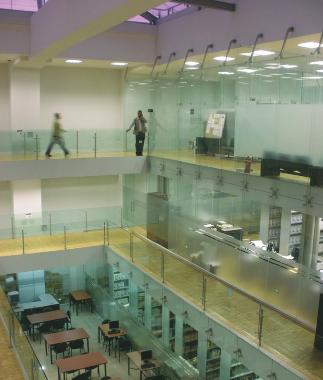
Library of the National Parliament
Powered by FlippingBook Publisher