SEO Version


243
www.ebizguides.com
Agriculture
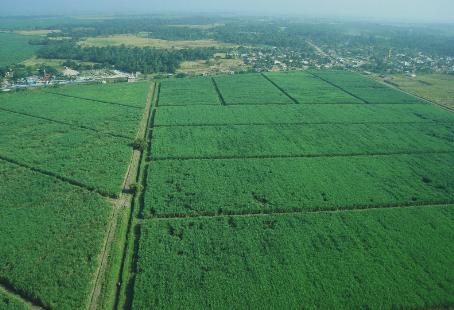
Agriculture land
4) CADES Program:
The program seeks to improve rural competitiveness.
There are more than 100 projects in the most remote
communities that involve smaller farmers.
5) National Inclusive Business (PRONERI)
This is a flagship program in which there have been
signed over 15 agreements with companies that deal
with agricultural production, generating benefits to more
than 20,000 families. The program encourages produc-
tive initiatives and commercial understanding between
small producers and agribusinesses. It allows the in-
corporation of low-income citizens in the value chain of
these companies. It also encourages a small farmer to
increase productivity, improve quality and requires him
to produce a minimum level of harvest in a given period
of time. In the past, this level could not be achieved and
small farmers were outside the commercial circuit with
large companies. On the side of large-scale business-
es, the principal requirement is to support small farmers
with technology. The idea is to subsidize small produc-
ers instead of simply investing in them.
6) Agriculture Insurance Unit (UNISA)
The Ministry of Agriculture, Livestock, Aquaculture and
Fisheries has created the Agriculture Insurance Unit
(UNISA, Spanish Acronym) to support the implementa-
tion of the Ecuadorian Insurance Scheme. There are
a total of 27,000 ha of cropland insured, representing
1.1% of total cultivated area (FAOSTAT). The risks cov-
ered are: frost, drought, floods, wind, snow and hail. A
total of 12 crops are covered.
7) Land Plan
The plan provides access to land. Currently, the main
problem for small farmers is the lack of access to the
main mean of production, land. Its actual value is far
beyond the commercial profitability. Land is a commod-
ity, because a peasant’s life revolves around it. The
lands that are chosen within the program are those that
are close to sources of water, roads and urban centres.
They are very accessible, but at the same time not in-
volved in production.
AGRICULTURE:
According to the Central Bank of Ecuador, the GDP of
agriculture, hunting and fishing in 2008 decreased by
3.2% and reached 5.6%, that corresponds to 2.944 mil-
lion dollars. If we add to that the figure of the oil GDP,
the total contribution of the primary sector in 2008 would
be 25.7%. In addition, 14 exports from this sector ac-
counted for approximately 71.1% of all the exports of
the Ecuadorian economy during that year. However,
we must take into consideration that 57.1% are repre-
sented by crude oil exports, whilst the rest corresponds
to banana (8.9%), canned fish (4.5%), shrimp (3,6%)
and flowers (3.1%).
Geographic and climatic conditions that character-
ize Ecuador allow you to have a wide variety of crops
throughout the year. Currently, the agricultural produc-
tion in the country is being diversified to a great extent.
Apart from so-called traditional crops, such as bananas,
coffee, cocoa, there has been emphasized the impor-
tance of crops with a great export potential. Thus, there
have been developed plantations of flowers, exotic
fruits (mango, passion fruit, melon, watermelon, pine-
apple, etc.) and vegetables (broccoli, palm hearts,
asparagus, tomatoes, etc.), which are considered non-
traditional crops.
On the other hand, organic farming started to be devel-
oped gradually in the country and has recently adopted
an official national seal. The main products identified for
export destinations are vegetables, bananas, shrimp,
sugar cane, coffee and cocoa.
In general, the technological level of the Ecuadorian ag-
ricultural sector is relatively low. The applied technology
is characterized by a certain duality. Capitalized pro-
ducers, mainly those of bananas and flowers, belong
to a segment that uses high-quality foreign technology,
while family farms are characterized by a minimum level
of technological preparation.
As regards the fisheries sector, there has been experi-
ences significant growth in recent years. Its contribution
to GDP in 2008 was 420 million that corresponded to
0.8%.
In 2008, products with higher output abroad were ba-
nana (with 8.9% of total exports), canned seafood
(4.5%) and shrimp (3.6%). In this respect, the produc-
tion of shrimp has recovered considerably after the
crisis of 1998, caused by the white spot virus. As for
foreign direct investment in the agricultural and fisher-
ies sector in 2008, it accounted for $ 16.7 million USD,
representing 1.7% of the total investment value (973.5
million dollars).
Powered by FlippingBook Publisher