SEO Version


27
www.ebizguides.com
General Information
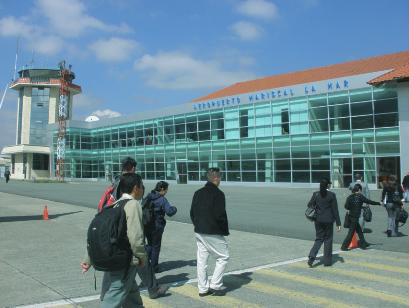
The airport network covers the whole country,
including Cuenca
Movile phones
This market has been dominated by foreign operators
such as CLARO (70% of the market, belongs to the
Mexican America Mobile which changed its name
from PORTA), and Telefónica (around 30% of the
market is commanded by this Spanish company).
CNT also own a third company named Alegro.
Blackberries are very popular.
Internet
The internet is an intrinsic part of the Ecuadorian economy
with extensive broadband access. The use of internet
on smartphone is becoming increasingly popular. Small
internet cafés can be found almost everywhere.
Health And Security
We would recommend to all businessmen and inves-
tors to use private hospitals as they are of a far supe-
rior quality and have experienced doctors.
No vaccines are compulsory but it is always recom-
mended that basic ones are updated and that the
yellow fever vaccine is administered if you intend on
visiting the Amazon area. Take a look at the Health
chapter where you will find profiles of the best private
hospitals in the country.
In Guayaquil we would recommend that you only
take taxis from hotels or reliable taxi chains to avoid
any trouble. Regardless, only use yellow taxis with
official stickers and try to memorize the license plate.
We took many taxis and never encountered any
problems whatsoever.
Visas
Entry and exit formalities
The Ecuadorian authorities grant two types of visa to
foreigners wishing to enter the country:
- Immigrant Visa Types 10-I (rentiers), 10-II and 10-III
(Investors), 10 -
IV (permanent workers), 10-V (professionals), 10-VI
(amparo).
- Non-Immigrant Visa Types 12-I (diplomats), 12-II
(senior foreign officials), 12-III (employees diplomats);
12-IV (refugees), 12-V (students), 12-VI (working), 12-
VII (missionaries), 12-VIII (cultural exchange), 12-IX
(commercial transactions), 12-X (bystanders).
Check with your embassy but most nationalities do not
require a visa. Once you arrive you’ll get a maximum of 3
months (90 day) tourist visa.
All travelers must pay a $40 tax before leaving the
country’s airports.
Ecuador is very well connected by plane and gradually
many new airports are being constructed. There are
international airports in: Bahía de Caráquez, Latacunga,
Cuenca, Guayaquil, Manta, Baltra, Portoviejo, Salinas, San
Cristóbal, Tulcán and Quito.Ecuador's biggest airlines are
TAME, LAN andAerogal (recently bought byAvianca TACA
in 2010) and then there are some small ones such as Icaro
and Air Cuenca. The larger airlines offer daily service to 10
cities in Ecuador. These 3 are also the only airlines that fly
to theGalápagos Islands. Flying within Ecuador is affordable
and well worth considering because of the short distances
from point-to-point it can save you many hours of travel
time. For example, a flight from Quito to Guayaquil takes
about 35 minutes and costs around $120 round trip, while
the bus takes over 8 hours each way and costs roughly $24
return. A flight from Quito to Lago Agrio, the nearest airport
to the Cuyabeno National Reserve in theAmazon, takes 25
minutes and costs $220 round trip opposed to the 8-10 hour
bus rideondatedand rough roads that costs$16 round trip. It
is easiest to stop at a travel agency to book your flight
TRANSPORTATION
By Plane
By Car
After air travel, cars are the second best option and
extremely useful once you arrive at your destination.
The general philosophy of drivers in Ecuador is 'I have
the right of way'. In practice, whoever has a larger
vehicle goes first. As a result, you will encounter lots
of horns blaring, brakes screeching and pedestrians
running in the big cities. There are some advantages
to renting a car whilst you are travelling in Ecuador.
Powered by FlippingBook Publisher