SEO Version


271
www.ebizguides.com
Entertainment
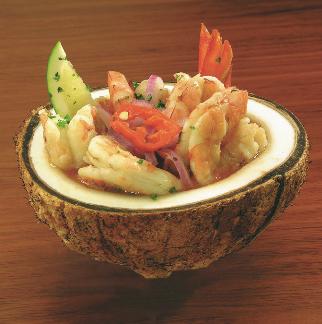
Fresh fish made ceviche
SUGGESTIONS FOR A PLEASANT
STAY
- Don’t walk at night in badly lit areas.
- Leave documentation and valuable things in your
hotel room or in a safety deposit boxes.
- Carry your backpack in the front. Especially if you
ara carrying a camera.
- Whenever you in a public space, keep your things
next to you.
- When you are at the airport, pay special attention
to your belongings.
- Be careful any time you go to an ATM; it’s better if
you go during the day.
Don’t let strangers offer you accommodation. Con-
sult a travel agency
THINGS WORTH KNOWING
ABOUT ECUADOR
GASTRONOMY: FOOD & DRINK
TRADITIONAL ECUADORIAN FOOD
Typical dishes in Ecuador’s highlands (sierra)
Traditional foods of highlands are potatoes, sweet
corn, cheese and avocadoes. Typical dishes include
llapingachos, delicious little fried patties of mashed
potato and cheese, often served with a fried egg, av-
ocado, and beetroot and sometimes sausage or pork
as well. Locro is a filling potato and cheese soup.
Whole spit roast or oven roast pigs (hornado) can
often be seen at roadside restaurants and the crack-
ling is fantastic. Fritada, lumps of deep fried pork,
are wonderful with a cold beer and are often served
with mote (a type of boiled corn) and a salad of to-
mato and onion.
Guinea pig, “cuy”, is a famous and traditional dish in
the highlands, often reserved for special occasions
as they are not cheap. You´ll need to eat them with
your fingers to get at all the crispy skin and tasty
meat, so make sure there’s somewhere to wash
your hands before settling on the location for your
cuy experience.
Cayambe, a town northeast of Quito, is known for
its regional speciality, type of buttery biscuit which
you can watch being baked in traditional wood-fired
oven, and dairy products.
Typical dishes in the costa makes use of local in-
gredients such as plantain (savoury banana), yuca
(a type of yam), coconut and rice. There are also
a wide variety of subtropical and tropical fruits (pa-
paya, pineapple, starfruit and many more) though
these do not often appear on restaurant menus other
than as fresh juices.
Plantain
is a staple in the costa and appears in
many forms, most of them very enjoyable. Pata-
cones are thick chunks of plantain, fried, bashed
with a stone, fried again and served with salt (and
a cold beer, if you can arrange it). Chifles are thin
deep-fried slices of plantain, rather like crisps. Ma-
duro con queso is a whole, barbequed ripe plantain
split open and filled with cheese, at its delicious best
from the stall on the corner at the Zapotal t-junction.
Unripe or green plantains are usually just referred to
as verde (green), which can be confusing. Bolones
de verde are balls of unripe plantain mashed with
cheese - perhaps the best that can be said is that
they fill you up.
Ceviche, the dish that sums coast and mountains
Ceviche, raw seafood (or boiled, in the case of
prawns) marinated in lime or lemon juice with chilli
and onion, is perhaps the most famous traditional
dish of Ecuador, usually served with popcorn. The
ceviche refers to the image of the sea, its exuber-
ance, the exoticism that is felt in the products it pro-
vides. Ceviche is a dish that meets the country. That
speaks to the versatility of the people preparing do-
ing it a little less sour and spicy that Peruvian.
Ceviche attracts a good list of sea food (shrimp, fish,
shell fish, crab, octopus, lobster) in combination with
Powered by FlippingBook Publisher