SEO Version


www.ebizguides.com
96
Energy
Ecuador initiated reforms in the electricity sector in the
mid 1990s, with the adoption of new sector legislation
and regulation. The sector saw the creation of regula-
tory and electricity wholesale market institutions and
the break-up of national monopolies. The new elec-
tricity sector law and derived secondary regulations
included policies and mechanisms to make services
more accessible and affordable to the poor, as well
as making the power sector more environmentally
friendly. While the overall reformed framework was
perceived as satisfactory, by the early 2000s the
electricity sector still faced different hurdles before
it would attain its short-term and long-term develop-
ment targets. The sector had to address the following
problems:
Gaps in the regulatory framework
• Weak institutional capacity
• Inadequate tariffs. Total subsidization for consump-
tion of electricity in 2000 was nearly 1.5% of GDP
(around $300 million USD) and electricity prices on
average covered only 55-60% of economic costs.
• Sub-optimal investment in the sector: Inadequate
tariffs over extended periods lead to a serious deterio-
ration of the financial position of the sector’s enterpris-
es. Financial problems, and the weak planning capac-
ity of the sector institutions, have been the two major
reasons why expansion of generating capacity did not
keep up with demand and investment has been tradi-
tionally high cost in order to meet emergency needs,
rather than part of a less costly expansion plan.
Lack of access to electricity in rural and remote areas:
• In 1999, 80.3%of the population in Ecuador had ac-
cess to electricity. This national average hides a huge
rural/urban gap: 95.8% of the urban population, but
only 54.9 per cent in the rural zones. By 2000, it was
predicted that the National Electrification Plan would
increase coverage in rural areas by up to 65% over
ten years. However, it had an important shortcoming
in its approach: it only considered increases in cover-
age through grid extensions, financed in part by the
National Rural Electrification Fund (FERUM).
FERUM
In the context of Ecuador’s overall developmental goals
of reducing poverty and reactivating the economy, the
Government and the public company CONELEC have
been committed to the extension of electricity services
to the rural world through the Rural Electrification Pro-
gram (FERUM) with $648 million USD on investments.
Andean communities, from the Coast, Orient and the
HISTORICAL Overview
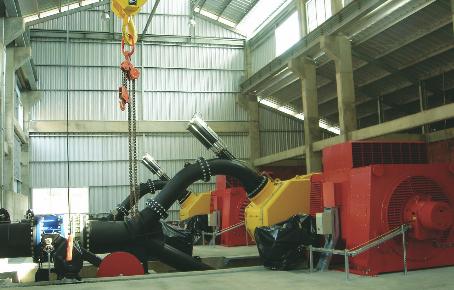
Electricity generation machinery. Source: Conelec
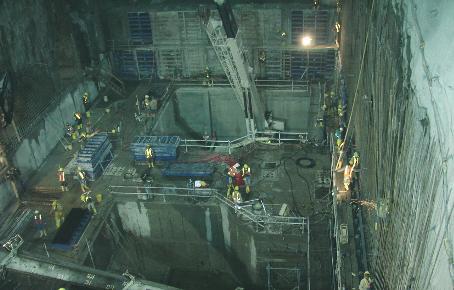
Inside the construction of a dam. Source: Conelec
Galapagos region are taking advantage of this pro-
gram. Only in 2008 there have been registered 2442
electrification projects running across the country. It
is expected that in the next 5 years a further 350,000
families will have electricity in the most remote parts of
Ecuador.
NOWADAYS
During the past three years, Ecuador relied on imported
electricity from Colombia and Peru to meet demands
during the dry season, but now those demands are cov-
ered. To achieve the goal of energy self-sufficiency the
Government of Rafael Correa began the construction,
for the first time in 20 years, of new hydroelectric plants
to improve generation capacity. Many opportunities are
available for international companies that want to invest
in the country. So far, both private and state companies
from China, Korea or Russia have taken advantage but
there are many potential investors yet to emerge.
Powered by FlippingBook Publisher