107
www.ebizguides.com
Energy
El Salvador is a country with much development
in the hydroelectric and geothermic energy areas.
Since the liberalization of the electricity sector in
1996, the sector has gone through major changes.
The Comision Electrica del Rio Lempa (CEL)
became LaGEO (Salvadoran Geothermic) in 1999;
and ETESAL. The Salvadoran Transfer Company,
also in 1999. The Transactions Unit that operates
the contract market and the regulating market of
the system was also created. In 1999 Duke Energy
bought the Acajutla thermal generator installations.
The mentioned companies together with the electric
energy distributor AES (through its filial Fonseca
Energia), INE (Inversiones Energeticas) and
Cenergica (own by Nejapa Power) complete the
principal private groups.
In the 1940’s the country bet on the use of
hydroelectric energy since it is based on the Lempa
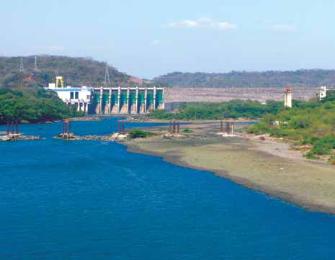
River, the longest river of the country. There are
several dams throughout the Lempa that guarantee
sufficient hydroelectric energy, like the November 5th
dam, inaugurated in 1954, Cerron Grande in 1977
15 September dam, one of the most important
and the September 15
th
in 1983. The country also
has the hydroelectric central Guajoyo, the thermal
of Acajutla, the geothermic of Ahuachapán, among
others. It is estimated that CEL has a generating
capability of 1450MV (megawatts).
The future El Chaparral dam is currently the great
energetic project of the country, with an investment
value close to US$220 million, an installed potency
of 66MW foreseen for completion by the end of
2013. It is being built by an Italian company, Stanley.
It has also provisioned the expansion of 66MW at the
November 5th dam, at a cost of US$130 million and
the investment of the pumping unit of Cerron Grande
estimated in US$40 million.
The Energy Mix
It is difficult to establish the energy apportioned by
each company because during the rainy season
the hydroelectric energy increases up to 60% and
even up to 85% if the season is rainy. During the dry
season the relevancy of especially hydroelectricity
greatly diminishes to 40% and the geothermic
energy output increases.