273
www.ebizguides.com
Entertainment
ARCHAEOLOGICAL AND COLONIAL
ROUTE
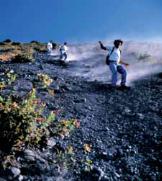
Izalco Volcano during an airplane show (Mitur)
Located between the Departments of San Vicente
and La Paz, this is a double peak volcano. One has
a flat top at 2105 meters above sea level and the
other is of conical shape of 2,181 meters above sea
level. Between the two peaks there is a depression
that used to be the crater. It is totally covered with
vegetation and has not had any known eruptions,
although it is not considered extinct because of the
sulfur thermal water and steam coming from its base.
This volcano is a total adventure. The best views of
Fonseca Gulf, Jocotal Lagoon and parts of Jiquilisco
Bay can be seen from its top. Considered active, this
volcano, produces clouds of eruptive dust and ashes
every now and then that pose no danger to visitors.
Conchagua Volcano
It is considered extinct and is found at the foot of the
Fonseca Gulf where the lava it threw in prehistoric
times formed the current coast.
This is the route that will take you through the main
archaeological sites of El Salvador that were part of
the Mayan world and some remains of the colonial
period.
Joya de Cerén
Declared World Heritage by UNESCO, this unique
Mayan place in the world shows the daily life of
indigenous Mayans; next to San Andrés’ ruins, about
45 minutes maximum from San Salvador.
San Andrés
This site used to be an important ceremonial center
and it is here where the first indigo workshop from
the colonial period can be found.
Santa Ana
The second most important city of the country, its
main attractive is its historical downtown that is a real
architectural jewel.
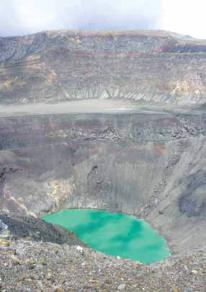
Lake inside the Santa Ana volcano