World Investment News | Create account
| Share This! |

|

|

|
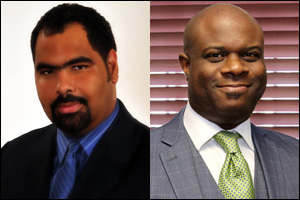
The Bahamian economy has a number of structural weaknesses. These were highlighted this week as S&P downgraded the country’s sovereign credit rating. In your opinion, what needs to be done to ensure sustained growth and prosperity in the country in future?
Gowon: The Bahamas, even going back to the days of colonialism, really had an economy that was built around financial services and tourism. At the beginning tourism was all about medical tourism -people would come to recover. It was seasonal in the past and then it expanded and became virtually year-round. In terms of financial services, our tax-free environment was a beacon for private banking due to our secrecy laws. What you will find is that those two industries still remain the top two industries today. The evolution of those industries is what is required to catch up with things that have been changing outside of The Bahamas. We have been fortunate in being naturally gifted with sun, sand and sea, and with no need to manipulate them, and that has always done well for us in terms of business. The cost of a visit to The Bahamas, however, has always been towards the high-end tourism product because it is not an inexpensive visit and so with that has to come the quality of infrastructure, quality of service and the value for money proposition, which you see a lot now taking place. Accordingly, a lot of the structural issues in terms of employment are largely because major tourism ventures, and not just the hotels but the tourism-related ventures, employ according to the Bahamas Hotel and Tourism Association, up to 60% of the workforce. And so in terms of how we evolve, we are moving away from what were the mega resorts developments, which may have been the crown jewel in the past, to the more boutique, private secluded ventures. You can see this in the Atlantis, where they have the resort side and then the secluded side.
Regarding the financial services, we’ve always held ourselves out as being a no tax jurisdiction and whilst that is still very true in terms of corporate taxes and income taxes, it is slowly of little value because the OECD initiatives in terms of tax are closing in on those clients who may have established banking relationships in The Bahamas for tax planning reasons. So now it has to be a tax jurisdiction, meaning it has to have some form of tax structure that allows either double taxation treaties or some form of relief for visitors that are here. So that industry itself is evolving and there has been a lot of press recently about the loss of employment in the financial services sector, which was really the middle to upper income earners.
So of the structural issues that have been identified, one of the key and perennial ones is the unemployment numbers that may fluctuate on a cyclical basis but have hovered in double digits between 14-15% for the past few years, particularly following the great recession. This is structural because it a large portion of employment has been through the touristic product establishments, and those are now competing for value of the money and high costs - so the employment levels that were reduced during the recession are not coming back to the same levels as they were before the recession because those establishments are looking at how they keep the costs of running their establishments down. There is actually the SME Development Act (SMEDA) that the government, and one of its ministers who is a past President of the Chamber, is pushing in order to say that’s how we spur on employment and level out our unemployment challenge because a business that may only employ five persons can withstand better than an establishment that employs 2,000 during recessions. A smaller business with five persons is easier to manage as you move through these transition phases.
What our product offering is, what our education system produces and employment levels are are three key structural issues that the rating agencies and observers will comment on. Those are things the Chamber is not directly tackling head on but is trying to assist. So the Chamber Institute, which is the training arm of the Chamber, has been running for a few years but is now seen as a critical training institute for our private sector members and non-members. The workshops and initiatives that are put on are widely sought after and so there’s constant demand for some formal training in that regard. That’s our contribution to education where we are not directly in the school system, but we are helping persons to develop skills.
The small and medium business helpdesk and the unemployment side is where we are focused. And the development of our product or identity is in part the efforts of the National Development Plan (NDP) because the NDP Secretariat it is performing a state of the nation in terms of where we are and where we want to be – the Chamber is actively involved in the Secretariat.
The Bahamas Hotel and Tourism Association purposely moved beyond just the hotel association to the Tourism Association so that its membership includes restaurants, tour operators and others. In the VAT discussion they were an integral partner in terms of that discussion because of the significance of the tourism product, and what they would say is you have seen the evolution taking place. You’ll see Paradise Island and its redevelopment from time to time. It is not new infrastructure being put there but you’ll see it constantly being refreshed. The One & Only is exclusive but there are other hotel establishments that are being subject to quite a large development on the southern side of Paradise Island. The Hilton, having recently been sold to the China State Construction entity, has plans to develop the Pointe, which is the downtown shopping mecca with high rises in terms of condos. The waterfront is another major initiative with the government in regards to the downtown redevelopment initiative that is taking place.
The Ministry of Tourism would say the Nassau centric element is a challenge that is being slowly broken because the family island promotion is becoming an integral part of their initiatives. They’ve branded each island with its own identity as part of the marketing strategy, and so there are well known locations in The Bahamas, Exuma probably being the most well known internationally because some celebrities own properties in the Exuma Cays, but that is a major high net worth individual playground. The Abacos have a very strong second home market so also many high net worth individuals. Eleuthera is a major island that is now looking at a Four Seasons brand that may be coming down. Smaller boutique developments, with less than 100 rooms, are taking place in the various island locations.
The challenge that needs to be addressed is the airlift because the gateway into The Bahamas is still New Providence and unfortunately the cost of flying from here to Freeport is about USD180 and to Florida is about USD220 if you book it in advance. Then you look at international versus domestic travel you will see that the cost of airlift is going to be a major challenge and if you are not getting planes directly into the islands and you have to stop in New Providence, it is almost another airline ticket in order to get into these establishments. Those structural issues are slowly being worked out but they all come back to “what is the identity and the product we want to offer in these industries, how do we diversify and how do we feed ourselves because we are a heavy import nation”. That has tremendous pressure on the balance of payment because we are importing virtually everything that we consume whereas our principle export is the tourism product so if that has any declines, the negative impact on the balance of payments is felt immediately.
We are pegged one to one with the US Dollar so that has requirements in terms of our currency reserves and so we have to mindful about how we maintain those. With the decline in some of the tourist dollars and foreign direct investment, government borrowing has been in foreign currency, which is acceptable but has to be cautiously monitored because you have to pay it back in foreign currency so you have to have surpluses projected later on. So the structural aspects are ones that we can’t wave a magic wand and cure overnight but the Chamber has identified where it can participate and contribute and through feedback to the government as well.
The Bahamas is well-known worldwide for its tourism and financial services sectors but, in order to build a stronger future, the government is working to diversify the economy. What sectors you would consider a priority for the development of the country?
Gowon: Tourism and financial services are still a huge priority but everyone would say that behind them there has not been enough. The construction industry sort of ties in with both, and that’s been a very big part of the employment sector in the country. But in reality as tourism is being bolstered, you have the construction product, second home owners, and others coming through as the financial services attract more financial re-domiciliation and with those types of initiatives, construction takes over.
As it relates to separate industries, what is being looked at is the shipping industry in Grand Bahama. Despite the Panama Canal getting quite a large amount of publicity now, the deepest waters actually run parallel to Grand Bahama and the actual entry into the Panama Canal runs through the same shipping lane. What they have identified is that we actually, unlike the Panama Canal, don’t charge ships to pass through that shipping lane. If you look at cruise vessels repairs and the transshipment of goods coming from eastern countries that stop in The Bahamas and onward to North America and South America, they are a huge industry but it is contained because it is in Grand Bahama where our principle facility exists. While we increase the huge amount of the port facilities here in New Providence, I would still say that it is for domestic consumption as opposed to the shipping revenues that are there.
Also agriculture on a very small scale. It is more focused to feed the nation as opposed to huge export. Fisheries industry is one, live lobster is a new initiative. There’s a new initiative that is going into China with an agency that is here and even before that, the lobster and crawfish industry was a major export. Outside of tourism, that was a significant export. It’s still about $100 million a year, when you talk about an $8 billion GDP, that is a large amount especially when you don’t have many exports outside of tourism.
There is always this cliché – diversification. The economists would say that it is diversifying the economy away from the concentration in the tourism products that we have an existence in now. In regards to sports tourism we have now hosted the IAAF World Relays, the inaugural and second year events and we are attempting to get that as an annual event. We’ve had some international football matches. There’s also religious tourism and ecotourism, so when we talk about diversification it might not mean away from tourism, it simply means broadening the tourism product. In terms of financial services, bank secrecy is virtually dead, it has moved into wealth management and in reality if you look at some of the major property developments on the western end of the island and even with the Baha Mar type of establishment, a lot of them are economic visitors that have been attracted who are going to take up Bahamian residency or even look at re- domiciliation. So the tax planning, estate planning and those things are still very much striving here, the trust business in The Bahamas is growing - it’s just that the private banking business is contracting. The trust doesn’t require the same level of human capital that the private bank would do and that is why you would see these elements. So diversification is more saying that given what we have a specialist advantage in, how do we broaden that to enable us to take great advantages and that is why Grand Bahama has a lot of untapped potential because it has natural infrastructure as well as developed infrastructure and a free trade zone area that has been established and so, how is that to be maximized. That has to fit in with the National Development Plan. So realistically we will diversify more through our specialist knowledge and interest and we will look into how to redesign that for the consumer public outside.
Edison: One of the areas we would like to see developed as a new industry is the ICT sector. Freeport has one of the most advanced infrastructure you’d find anywhere in the region but it’s underutilised to a great degree. So we think that a concentration should not be shifting to some technical expertise, but getting our people trained as ICT professionals so they can become decoders and programmers etc because this is a fast growing industry globally. Considering that we are also advancing our telecommunications infrastructure in the country, a focus we think on developing more ICT professionals is something that would work well in the country, especially with younger people now having interest in the internet. Some of them don’t realise how smart they really are based on the things that they do so we want to take that talent, harness it and put it into the formal sector economy so they become qualified technicians, software developers, coders etc. We have the infrastructure for it and infrastructure is being developed even as we speak. The more companies that are getting engaged in providing telecommunication services, the more the infrastructure is being developed. Also due to our geographic location and connectivity we are in a much better place than even Jamaica to provide a service to the Americas, the Caribbean and even getting further south into Latin America. We are well positioned to be the service centre of the region and we have started initial discussions with the government and now it’s up to us as private sector to assist in developing this as an industry and put together a proper framework that we can present to the government and to get the support from them as seeing it as a pillar of our economy over the next 10-20 years.
The Bahamas Chamber of Commerce
Gowon: We are structured in a manner that mimics what we would call the aspects of the economy and the government ministries. So we have a labor and employment division so things that may pop up as it relates to wages, minimum wage, employment matters and union contracts would come through that one. We have a tax division or coalition that is probably the most recent division and that looks at tax reform and the fiscal reform and its commands. We have a number of other divisions such as trade, innovation, small and medium size businesses and energy reforms.
The board of directors is a volunteer establishment but we do have a formal executive that works. Edison being the CEO started working at the Chamber of Commerce in order to ensure that things are continually moving.
We have spent a lot of time recently looking at the initiatives that the government is now looking to embark upon. Fiscal reform is a big one and that’s going to remain at the forefront for an extended period of time. Energy security is probably right up there with it because a number of the businesses would say that aside from payroll, because we are predominantly a service industry, their costs are consumed by energy. So the ability to reform the energy sector and cheapen the cost of energy is going to be a tremendous economic boost. If we can bring that down, capital investment can be used for those funds that are being used.
We also have new initiatives now with the National Health Insurance that the government is aiming to roll out in January but I think that’s more in terms of registration. Whether it becomes reality in its fullness is only a matter of time but we have a committee that is very much geared towards responding to that and taking in the views of the private sector. Those are examples of the committees and how we respond back to them.
As our name suggests, we are not just a chamber of commerce but also the employers confederation so it is not only the private sector grouping but also the representative of the employers in matters impacting the country.
We have a very strong brand and reputation amongst the policy makers. Our opinions are valued by them, not always are they wholeheartedly accepted and implemented, but they are certainly not dismissed. We are consulted in regards to any major decisions that come about, we are very rarely blind sided by an initiative. It is something that is discussed with us and sometimes we get to influence it more than other times but we always have the opportunity to give feedback to them. Our access to ministers and their departments I would say is unfettered. We don’t have restrictions and usually at very short notice, subject to travel plans, we have the ability to meet and have dialogue with them.
We have a number of plans for ourselves as a private sector organization. The small and medium sized business help desk is a major initiative, which was funded initially by the government. It aims to provide small business with a resource tool to help them right from the very beginning of what is it I need to start a business through to how do I find financing and make the right connections in terms of the government. It’s not a funding tool or business funding, it is a help desk, but it has tremendous importance. Locally when we were doing the VAT rollout, government had an estimated 15,000-16,000 businesses in The Bahamas, with 4,000 to 5,000 businesses with a $100,000 revenue threshold requiring mandatory registration. This indicates that you would probably have 10,000-12,000 businesses that are $100,000 less. Further, of the businesses expected to register, there were less than 200 with revenues in excess of $5,000,000 which would require monthly VAT filing. There is a very small population of those that have what I could call very large revenues, so the sweet spot is $100,000-5,000,000 in terms of gross revenue and that is what is driving the economy. It is going to be of tremendous importance to ensure that those are the classes of merchants that get the greatest assistance, and we are working with the government to expand the funding aspect of it.
We are also building our data gathering exercises because a lot of data is available, not necessarily in the easiest of places to locate and not always the most current. There are initiatives in the government to improve that but we want to be a part of that. We don’t have the resources to take it on for the government and do all data gathering but we want our own data gathering from our businesses because our feedback, and I think that’s why we have been respected, is that we are not being sentimental. We are fact based and based on analysis, and we have actually spent considerable resources in the past few years with economic studies or analyses and impact studies to see what is the impact of the decisions being made and that’s how our feedback has been based on on a numbers or angible evidence.
Our presence is recognised by most of the international agencies that either reside or visit. IDB is one that we have strong collaboration with in terms of funding. We are a regular stop for the IMF as they now do their Article IV reports for countries and I think they, certainly in the last 18 months with the VAT debate, have gained a great appreciation and respect for the role the Chamber has played. When S&P and Moodys are in town and have assessments that are ongoing, we give our feedback to them. Other agencies include the Caribbean Export Development Agency and the International Labor Organization (ILO). We actually either have seats on those boards either through the Caribbean institutions that we are a member of, or directly with them, including the Board of the International Chamber of Commerce. So I think that we have quite a far reach and a broad impact.
So this gives you a sense of what goes on in the Chamber, sometimes the volunteerism is only in title because there’s quite a lot that is constantly going on and important because the community actually looks to the Chamber’s lead in a number of things. It gives credibility to a number of events and initiatives when the Chamber is either participating or attending. Right down to recent public sector training sessions that we participated in and in the one coming up we have been asked to be facilitators in some of the sessions. Even though it’s the public sector being trained, the office of the Prime Minister and the Public Service Commission would like to have the private sector involvement and participation.
Edison: We have 16 very active divisions in the Chamber. We try to mirror what we see happening on the public service side and have counterparties to government ministries so that we have very active discussions on any topic of significance in the country.
As far as the operations are concerned, the Chamber has a permanent staff of six people including myself and we are taking on two new staff members this week. They are coming to assist us with our efforts in building our SME Help Desk so we are bringing in a SME coordinator. As Gowon said, we realize the importance of data gathering so we are bringing in a research analyst who will be working with us full time as well and that is not only to identify different areas of data that we need to collect and gather statistics of course for the private sector, but more importantly in some instances, to help us identifying opportunities that are there for the private sector when it comes to crowd funding, technical cooperation agreements, training facilities etc. We are convinced that there is a lot of money and seed capital out there and a lot of training facilities that we want to take advantage of, but because we haven’t been focusing so much on those areas until now we have been missing out on a lot of opportunities for some private sector participants. So we expect that is going to change quite drastically over the next few months. This week, for example, we confirmed that we have one member of our staff is leaving to go to China to do a training course for three weeks courtesy of the Chinese Government. We get these invitations very frequently but the challenge for us is that often times we can’t find suitable candidates to send to these training facilities and now they are beginning to exclude some people because when you turn 45 you can’t go, so there are age restrictions.
In terms of what we are working on now, there are a few major initiatives that are on the table. The Help Desk is a major initiative for us. It is something we’ve been working towards for a while and that help facility really will include a strong component of a mentorship programme. So it’s not just that we are seeking to give advice to small businesses whether they are start up operations wanting to start a business or they are seeking assistance in managing the business, but we are also now going a step further by providing seasoned business people who we can assign as mentors for companies as well. That is important for us because we are finding out more and more that, as important as access to capital is, it’s really on top of the list of requirements that business people are telling us is where they’re hurting. There are still also a lot of businesses who have capital but lack everything else they need. They may lack business acumen or do not how to prepare their financial statements, and while some of them have some healthy cash flows, they cannot afford to go to a big four firm for accounting services. So we want to provide that level of support to these companies and also to start up operations, those who are looking to develop their business plans and marketing strategies or who might have exhausted all their options for funding, whatever they are missing to go to the next phase of their business. These are the things that we want to bring to them and provide the facilities that they need. We are not a funding institution, the help desk is not intended to fund anything, but we expect that we will be able to show them how to get the funding that they need for their businesses. Because of that we were very careful of how we launched this, we issued an RFP for help desk professionals to come in and help us with our capacity and now we are going through the process of having those small business professionals validated and essentially certified by the Chamber. After they have passed through the training workshop next week, they’ll be officially appointed as help desk professionals. The workshop next week is one that’s been conducted by the ILO and they will assist us in measuring the applicants who responded for the help desk.
We understand the challenges in the economy in some cases as good as, or better than, the government because we are the ones generating the activities in the economy. The government is there to raise revenue, impose taxes etc but we are the ones generating that revenue for them, so anything that happens in this economy, whether it is an initiative that the government introduces or something that the private sector wants to see done, we insist that the private sector be involved in these discussions. Having it any other way is going to be futile because as we saw in the VAT debate, as we saw in the minimum wage increase, as we see now with the discussions on the introduction of national health insurance, it doesn’t make any sense for the government to consider a new policy and to implement it without having the private sector’s involvement, especially if it’s something private sector finds to be very onerous to their businesses. To that degree then, we have a very healthy relationship with the government as it relates to having these discussions on these matters that we see as being of national importance.
We not only have discussions locally with the Bahamas Chamber, but we engage our chambers throughout the country. We have nine chambers in The Bahamas apart from the Bahamas Chamber of Commerce. We have another two or three that we are currently working with to get them organised as Chambers. The most recent Chamber is the one we established in Bimini, where they have the resorts, hotel facilities and casino. We are working on two or three others now in the southern part of the country and we are hoping to get them properly organised in the fall because we believe it’s very important to keep the family islands very engaged in the discussions because they have complained for a very long time that everything happens in New Providence. This is the reason why we established the National Chambers Conclave in 2013, an initiative whereby every year we bring together all of the Chambers from throughout the country into New Providence for two days. We have the chance to discuss issues concerning them in their jurisdiction as well as those concerning the country as a whole. We then find the most proper way to address those concerns. We have ministers coming to speak to these chambers executives and let them know what their plans are for each of their areas, and it creates a wonderful dialogue between the chamber’s executives and the government. Even the Prime Minister, we invited him both years and he was able to come and have wonderful dialogue and exchange with the Family Islands executives. That was a major accomplishment for us to be able to bring these groups together, and all of them have signed onto the Bahamas Chamber as what we call our affiliate associate chambers and that was done through a memorandum of understanding. So we are now one big happy family again, the parents are in Nassau and the children are all spread out and doing what they can to improve the economies of those Family Islands.
One of the most active divisions now in the Chamber is our Labor and Employment division because we are dealing with issues like the increase of the minimum wage and redundancy benefits for employees in the private sector. There is a council that was established a year ago and officially established in May of this year, which is called the National Tripartite Council. That is a partnership among the workers of the country represented by the trade unions, the employees represented by the Chamber of Commerce and the government, who are all part of a social partnership. That council was established so that we could address issues in the labor force quickly before they become national catastrophes, for example, trade unions demonstrating against employers or the government. It really provides an avenue for us to address any issue that we see coming up that could be contentious and resolve them before they become problems. That’s been working out pretty well so far and that is the Council that has essentially led the discussions for the recommendations of the increase in the minimum wage to the government.
We have some other things on the agenda that we are currently working on. I am working to finalise the official agenda for the Tripartite Council, where the private sector is represented by the Chamber of Commerce. The next move that we are going to be tackling that is very pressing is the introduction of the National Health Insurance (NHI) scheme. That has its own set of challenges and so we are working and advancing our work with the government, having some discussion about its implementation. Because of the importance of it we have actually initiated an entire division of the Chamber to look after those discussions because it’s that important for us to do so. Similar to the way we established the Coalition for Responsible Taxation to address and deal with the VAT implementation, we have likewise established the NHI Review Committee who are the ones leading the discussions for the Chamber on this matter.
Membership
Edison: When we talk about our members we have to look at it in segments. The overall membership of the Chamber is about 800 between the large companies, the small and medium size companies and individuals. We have individual members but also pretty much every major trade or professional association in the country as a member. But when we look at the membership of the Bahamas Chamber of Commerce and we take into account our associate and affiliate members, our membership is well into the thousands because we take into account members that are in Nassau but also those that are part of the Grand Bahama Chamber, the Eleuthera Chamber etc because the Bahamas Chamber of Commerce and Employees Confederation, and this is something we need to make sure people understand, covers the entire country. When it was established in 1935, it was established as a chamber of commerce for The Bahamas but as time went on we saw the need to have more concentrated efforts in some of the family islands so 30 years later in Freeport, they formed the Grand Bahama Chamber of Commerce because that’s when they were developing the city. Many years later more chambers started to get on board and we have been able to bring them all together again under the umbrella of the BCCEC. So when we talk about our membership, we must include with the representation that we have in all of the various islands as well. I would say that we cover most of the private sector businesses in the country even those who belong to other trade associations like the Bahamas Hotel and Tourism Association because they see the value in being involved with the Chamber because it facilitates a much stronger voice. All of the large companies in the country are part of the Chamber but we are also very proud to represent the individual entrepreneurs and sole proprietors. While we understand it takes 10 SMEs to contribute what a single large company would contribute as far as its membership fees are concerned, we approach it in a way so that the smallest companies feel as much a part of what we are doing as large companies do and that they have the same level of access to the Chamber. 2015 is the year of the SME because they have always expressed that we are not getting the level of attention that they need from the government so we are putting a lot of effort into developing this segment of the economy and launch this help desk next week.
Final message to HBR readers about The Bahamas and the Chamber of Commerce
Gowon: The Bahamas is more than what it is perceived as – a tourism jurisdiction. I think the strength and wealth of The Bahamas as a country is actually in the people that represent it. Our diaspora internationally are amongst the highest performing individuals whether it be in Wall Street, in professions such as accountancy, law or medicine who have taken the opportunity to go abroad and are major contributors internationally, and from that perspective it demonstrates the quality of what the country can produce. It is certainly a small island nation that punches far above its weight class when you look at, for example, athletics or scholars. For a nation of over 300,000 persons it has shocked the world in what it is capable of doing. So The Bahamas is a jurisdiction that has tremendous potential and most be remembered as being a fairly young independent nation, having gained our independence in just 1973. Sometimes we are compared with nations like the United States that has been independent for hundreds of years. So we are very quickly creeping up that established nation status and probably one of the few countries that I would say might be designated as a third world but lives first world both in terms of its education, its lifestyle and what it contributes to the global economy.
From the Chamber’s perspective, it is important that we are the gateway to the business community and government. Our establishment is one that gives private sector enterprises, whether they are domestic or international players, trying to do business in the Bahamas that voice and also that sounding board of how things transpire in the country. Our strength is in our numbers, therefore we look for persons who enter the business community in The Bahamas to join the Chamber of Commerce because that allows the initiatives that we start to grow and expand further beyond the reach it already has. So we welcome all domestic and international business players to be a major part of the Chamber of Commerce and from that perspective we consider ourselves an open institution, in that we welcome feedback, criticism, analysis, of course funding but also ideas in terms of what can we do to make The Bahamas a better place and to use the slogan “It’s better in The Bahamas”, and to keep making it better and better. The image of the country and the Chamber mirror one another in that they are both small institutions that pack a powerful punch.
Edison: We see the Chamber of Commerce as more than just a business association. The BCCEC is necessary for the advancement of private sector enterprises and is necessary to continue building the relationship and dialogue between the government and the private sector. We are the major liaison between them and for the economy to continue to grow and develop, that dialogue must continue. For that reason and the reasons that Gowon expressed, the Chamber is not just an association but is absolutely necessary for the growth and development of The Bahamas.