SEO Version


249
www.ebizguides.com
Agriculture
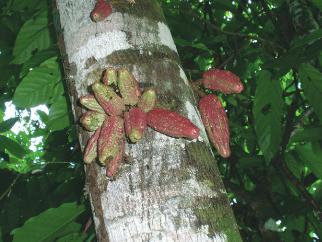
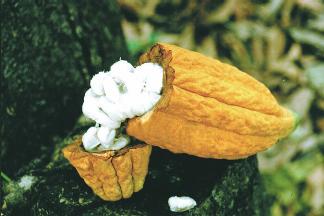
Naturally born cocoa
Acocoabob
a national product. High standard markets have
an increasing interest in finding cocoa with these
characteristics. In botanic terms, this type of co-
coa belongs to the group “forastero amazónico”.
Until the 90´s, chocolate with high content of co-
coa (more than 60%), had a reduced market. Cus-
tomers gave their preferences to sweet chocolate
with milk. The exception were countries such as
France and Belgium, where the majority of people
consumed high quality chocolate with high con-
tent of cocoa - reason why “national” cocoa has a
special treatment worldwide.
Production and Exportation.
Ecuador is the largest fine cocoa producer coun-
try with approximately 60% of the worldwide
production and exportation, between 110,000 a
150,000 Tn per year.
Nowadays, the cocoa in Ecuador covers a total
surface of 463,000 hectares, representing 7% of
the national agricultural production. 85% of the
products are exported, out of which 73% are ex-
ported in grain, 12% as elaborated products, and
only 5% is consumed entirely by the chocolate
and sweet industry.
Presentations of Processed Cocoa
Ecuador also exports cocoa in other elaborated
forms, such as:
· Cocoa liquor,
· Cocoa powder,
· Cocoa pie,
· Cocoa butter, and
· Chocolate
Nowadays, 75% of the Ecuadorian cocoa with “fine
flavor” is used to process fine high-quality chocolate.
Tendencies at the International Market
Out of all the world’s cocoa consumption, more
than 70% is consumed in the European Union,
especially in the north of Germany with 11.6%,
France with 10.3% and United Kingdom with
9.2%, whilst the United States consumes approxi-
mately another third that accounts for 32.7%.
COFFEE PROFILE IN ECUADOR
Ecuadorian coffee - “one variety for each taste”
Coffee activity in the Ecuador and its importance
Due to its geographical situation and it´s unique cli-
matic conditions, Ecuador is one of the few countries
in the world that produces and exports the two com-
mercial coffee species: Arábigo (Coffea arábiga) and
Robusta (Coffea canephora), which allows produc-
ers to create excellent mixtures and flavors.
The coffee sector is of relevant importance in Ecua-
dor, from the economic, social and ecological per-
spectives.
The importance in the economic aspect stems from
the income it generates for the State, as well from
important inputs it creates for those families and in-
dividuals that belong to the coffee sector.
The social aspect is reflected in both direct and in-
direct job creation that benefits directly more than
105.000 families; as well several million families that
are linked to the commercialization, industrialization,
transport and exportation of coffee.
In terms of its ecological impact, the importance
of the coffee sector is related to the adaptability of
coffee to different ecosystems of the four regions of
the country: Costa, Sierra, Amazon and Galapagos.
Mainly, it can be grown under trees with high ecologi-
cal and economic value.
Powered by FlippingBook Publisher