21
www.ebizguides.com
General Information
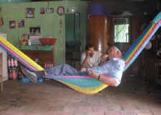
Have a siesta!
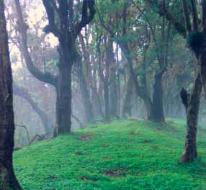
Los Andes forest in Sonsonate (Mitur)
Population
El Salvador has a population of 5,744,133 million,
according to the May 2007 census taken by
the General Direction of Statistics and Census
(DIGESTYC): 62.7% of the population is urban and
37.2% live in rural areas. Of the total population,
52.7% are women and 47.3% are men, that is, for
every 100 women there are 90 men.
El Salvador has an economically active population
(EAP) of 2.5 million people, representing 53% of
the total labor force of El Salvador. The population
density of El Salvador is 276.9 inhabitants per
square kilometer. It is the most densely populated
country of Central America, and is surpassed only
by some Caribbean countries. The grand majority
of the population ranges between the ages of 10 to
14 years old, and 65% of the population oscillates
between 0 and 29 years old, making this country a
country full of young people.
Ethnography
Over 90% of the Salvadoran population is mixed,
consisting of a mixture of Spaniard and Native
Central American. The rest is non-mixed white (1%)
and native Central American (10%).
El Salvador is the only country in Central America
that does not have a native African population
due to the inaccessibility to the Atlantic Ocean; in
addition, General Maximiliano Hernández Martínez
established racial laws in the decade of 1930 that
forbade the entrance of the black population into the
country. Among the immigrant groups that arrived in
El Salvador were Palestinian Christians. Although
people and culture
they were few, their descendents have been able
to reach high levels of economic and political power
within the country.
There are approximately 3 million Salvadorans living
abroad as immigrants in the United States (the
great majority illegal), a destination that they have
traditionally migrated to in order to abandon their
poor economical situation and search for better
living conditions. There are also a great number
of Salvadorans living in Canada, Italy, Sweden,
Australia and Spain.
Language and Culture
The culture of El Salvador is a mixture of Maya,
Lenca, Nahuat, Ulua, Spanish and other minority
ethnic cultural groups.
Less than 1% of the population speaks Nahuat.
There are only two towns that still preserve their
Nahuatl traditions: Izalco and Panchimalco. In
Panchimalco, an indigenous town in El Salvador,
there is an art and cultural center called Tonatiuh,
with the sole purpose of educating youth through
Indigenous art, science and traditions established
in 1989.
The Catholic religion has played an important role
in the El Salvador’s culture. Paintings, ceramics and
textiles are the principal manual artistic expressions.
Important Salvadoran writers are: Francisco Gavidia