World Investment News | Create account
| Share This! |

|

|

|
“Since we have changed to a state university we have had big opportunities to develop our University especially in improving our performance academically and in research.”
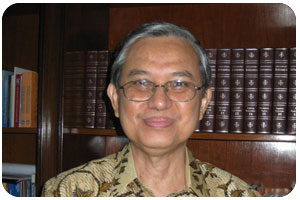
The Rector of Airlangga University tells us about the facilities and current key strategies for its school. He tells us the story of the university, its achievements and its current role contributing to the social and economic development of Indonesia.
Airlangga University is one of the oldest state universities in Indonesia. Could you give us an overview of its history, from its establishment up until now?
Airlangga University was established on November 10, 1954 and ever since has remained one of the prominent public universities in Indonesia. We started with five faculties, which were the Faculty of Medicine, Faculty of Dentistry, and Faculty of Law. The Faculty of Letters in Denpasar Bali has become Udayana Universitiy. Also the Faculty of Education and Science, located in Malang has become Universitas Negeri Malang. Several faculties were established later, which included the Faculty of Economics established in 1961, the Faculty of Pharmacy in 1964, Veterinary and Medicine in 1972, Social and Political Sciences in 1977, Mathematics and Natural Sciences in 1982, Public Health and also Psychology in 1993 and Letters in 1998. The Mathematics and Natural Sciences faculty, during the present time, has become the Faculty of Science and Technology, while the Faculty of Letters has become the Humanities Faculty. So we are dealing with health and a social science, right now the university has 13 Faculties that includes two new ones which are Nursing and also the Fisheries and Marine Science Faculty.
Since September 2006, Airlangga University became a state-owned enterprise and this has given the university a chance to be more autonomous. In Indonesia there are seven universities that have their own autonomy. Airlangga University has been the latest to achieve so. With the new status we have more freedom in running the academic administrative management, finance as well as other activities. This of course has given us a better chance to cultivate a competitive academic environment. Through systematic preparation we are then able to formulate our vision and mission as an important tool to determine strategic plans aiming at achieving our main goal which is becoming a center of excellence as recommended by our President.
This university is supported by 1.629 academic staff, 1.120 non-academic staffs, and 22.492 students. Also part of it are some supporting units, including the Institute of Tropical Disease, the Institute of Research and Community Service, the Institute for Education Studies and Development, a Center for Health Care, a Center for Career Development and Entrepreneurship, a Center for Student Enrollment and a Center for Printing and Publication. Right now we are preparing to establish a unit to produce vaccines for avian influenza. Besides that, we also have the opportunity to develop a teaching hospital university for the Medical Faculty because until how we have not had our own teaching hospital. As you know, our Medicine Faculty was established more than one hundred years ago but we still have not had any teaching hospital. So it is a challenge for us to develop the teaching hospital.
Airlangga University is ranked as one of the best universities in Indonesia. What would you say are the strengths and competitive advantages of Airlangga compared to other universities?
We concentrate on tropical diseases for our health sciences and pure medicine. This university has a long history of developing competences in health sciences and pure medicine especially when it comes to tropical disease research. Besides that, the Ministry of Health has given us funds to produce vaccine for avian influenza and facilitated us with infection hospital for East Indonesia.
Airlangga University has educated many important business and political leaders such as The Governor of East Java. How important do you think the university is to the development of East Java and Indonesia?
We have cooperation with other universities in East Java to build the excellence of East Java because I think that in order to develop we cannot only rely on the work of one university. We have to collaborate with others. Based on our competences we will contribute on developing excellence in East Java through the Life Sciences, Social Sciences, Economics, and Law Faculty.
University Airlangga is very keen on establishing and maintaining relations with other strong universities as well as national and international. Could you tell us about the involvement of the university with other international universities?
We have collaborations with universities abroad. We have an especially close relationship with Japanese universities such as Kobe University, Tokyo, and Kyoto University. With our closest neighbor, we collaborate with the University of Science Malaysia, University Putra Malaysia, and others. With the Singapore we collaborate with the National University of Singapore, with their university hospital. Other countries we also collaborated with are Thailand and their University of Tulalengkor, Europe, Amsterdam, and Groningen. We developed a double degree program and we also have students exchange program.
Receiving awards and accreditation is very important to the trust and recognition of a university. Airlangga University has also received many awards such as the Telkom Award and the Accreditation of the Higher Education National Accreditation Body. Could you please tell us what awards have been the most important to you and which ones are you the most proud of?
We have received National Accreditation with A Category which is the best category. Several faculties have also received ISO.
The Ministry of Education has received the most of the national state budget this year. What do you think are the main developments that are going on in the education sector right now?
We are glad that the constitution has given its mandate to the state to give the education sector 20 percent of their budget. But as you know, only a little percentage is distributed to higher education. It means that the financing is still not enough to develop our universities, especially for Airlangga University. Therefore we have to run the management efficiently and effectively.
During the recent visit of the US State Secretary Mrs. Hillary Clinton, she mentioned how the US and Indonesia are seeking to have a robust relationship especially on the education sector by increasing the number of exchange programs. What is your opinion on this?
We are following this program by sending our students and staff abroad. Right now we are sending them to Malaysia, Singapore, and New Zealand.
What is your opinion on the fact that Indonesia and the United State are improving its relationship on the education sector?
I am very glad that the President has committed to give aid for education. It means the relationship between Indonesia and the US is like in the 1960s and the 1970s when many professors came to Indonesia to give lectures and encouraged universities to develop.
Let’s say we will come back within five years from now. What would you tell us by then about Airlangga University? What will have changed?
Since we have changed to a state university we have had big opportunities to develop our university especially in improving our performance academically and in research. Based on this idea we will be more of an Entrepreneur University based on research especially on tropical diseases and agriculture; we have some research in fertilizer and we are now collaborating with many industries in East Java and East Borneo.
Our readers are also interested in you. Could you tell us a little bit more about your personal background?
I was born in Lawang in 1946. I studied in high school at Jember, East Java. After that, I went to college in Airlangga University. I studied pharmacy and graduated in 1977. I continued my studies and received a PhD from ITT in 1982. I gave lectures for the pharmacy faculty and am also a professor in bio pharmaceutical and pharmacy genetics. Besides being a lecturer I am also an NGO activist especially in Muhammadiyah, one of the biggest Moslem organizations in Indonesia. Between the years 2000 until 2005 I was the Chairman of the East Java branch. Since 2005 until now I have been a treasurer for the central Muhammadiyah office.
What would be your personal messages for the readers of New York Daily News and the visitors of Winne.com?
I hope our brothers in the US will get to know much about Airlangga University and can collaborate with us because we have the same obligations towards humanity. We have to overcome climate change for example, which is not only a problem of the US or Indonesia but a problem for humankind. I hope that the relationship between universities in the US and Indonesia will improve and this will make our brothers to come to Indonesia.