|  GUATEMALA GUATEMALA
merges with globalisation |  |
 |

Contact:
8a. Avenida 10-43,
Zona 1
Guatemala C.A 01001
Tel/Fax: (502) 221-3619, 221-3047, 221-3111
Website: www.pronacom.com
|

Guatemala is a multicultural country by nature, it is a country of many opportunities. Strategically located, Guatemala is the gateway to the Central American Common Market and possesses the largest economy in Central America. Its geographic location positions the country as a natural platform for the production and exporting of products and services to the world marketplace. It has an excellent potential for the development and operation of a number of productive economic activities, a young and abundant labor force and a constantly improving political environment conducive to stability and sustained economic growth. The competitive and comparative advantages of Guatemala have been widely recognized by the business community around the globe. Many foreign companies and entrepreneurs have moved on to make their investments and to join local partners to take advantage of the investment climate and opportunities available. Many have succeeded.
The efforts of the private sector are complemented by the Governments commitment to improve the investment climate. Legislation to stimulate foreign investment and simplify procedures for companies to incorporate into Guatemala's business environment has been passed. The Guatemalan congress enacted the new Foreign Investment Law (Decree 9-98) that guarantees national treatment to foreign investment, contains no special treatment for foreign capital, and discourages discriminatory measures. Guatemala's Invest Promotion Initiative PROGUAT, a joint private sector / public undertaking, was designed to promote foreign investment and to simplify incorporation procedures for foreign enterprises that wish to establish themselves in the country.
Working within PROGUAT, the Ventanilla Unica de Inversiones or One Stop Window for Investment is designed to expedite and solve any investment related problem that potential investors may encounter. Guatemala is open for business. A new and innovate vision has surfaced in Guatemala´s business enviroment: Breaking frontiers, securing opportunities to gain knowledge, acquiring the necessary means to stand out in the global market; that is the Guatemalan enterprises new vision. With a little foresight and open attitude, your future in Guatemala´s can be prosperous and succesful.
We welcome you to Guatemala
 Guatemala's Competitive Advantages Guatemala's Competitive Advantages |
Equal treatment of foreign and domestic investment (the same lawa and regulations apply to all)
No restrictions on repatriation of Capital
No limits on foreign investment, foreign ownership by individuals or corporations (with limited exceptions of national strategic interest)
No requirements for Guatemalan partners, corporate officers or quotas on management
Elimination of double taxation situations for foreign investors
Constitutional guarantees safeguarding private property
Geographic proximity to the NAFTA block, the largest consumer market in the world (380 million)
Natural gateway to Central America (with a market over 32 million consumers)
Largest market in Central America (with one third of the Central American population 10.8 million)
Modern port facilities on both the Pacific and the Atlantic oceans
Cross-country highway network connecting both oceans and land borders
Sustained economic growth 3% - 5% since 1986
Economy dominated by the private sector (produces over 84% of GDP)
Preferential access to U.S. and European markets, through such arrangements as the General Preferences System (GSP) and the Caribbean Basin Initiative (CBI)
Founding member of the World Trade Organization (WTO)
Member of the Overseas Private Investment Corporation (OPIC) and the Multilateral Investment Guarantee Agency (MIGA)
Largest labor-force in Central America region (3.4 million over the age of 18)
Open Skies Policy
Incentives for drawback activity
Over 300 micro climates, offering one of the most varied agricultural bases in the world
Excess flow water resources and rich mineral reserves (petroleum, nickel, lead, copper, etc.)
Unlimited potentialh for the tourism industry
Sophisticated and organized private sector, with business know-how and capital
Six academically strong universities, with close ties to prestigious universities abroad
Excellent grade and high schools available
World class restaurants, hotels and entertainment
The best Shopping Centers in the Central America area
| Investment Incentives |
The following laws promote foreign investment:
 Foreign Investment Law (Decree 9-98) Foreign Investment Law (Decree 9-98) |
Repatriation of profits is allowed without restrictions
Foreign investors are permitted to participate in any lawful economic activity
Double taxation is disallowed
Established norms that facilitate the negociation of bilateral investment treaties
Establishes standarized treatment for foreign investors
Recognizes full property rights to foreign investors
Allows free trade of lawful goods and services
Permits investors to freely carry out transactions in foreign currency
Insurance for non-commercial risks is recognized
Repeal of minimum Guatemalan capital requirements
| Drawback Industry Law (Decree 29-89) |
Exemption on import duties of raw materials, machinery, equipment and spare parts
Value added tax exemption on imports
10 years exemption on income tax
To obtain benefits of Decree 29-89 an application must be submitted to the Ministry of Economy enclosing an economic study and an enviromental impact study.
| Petroleum Operations / Hydrocarbon Law |
(Decree 109-83), Mining Law (Decree 48-97), New and Renewable Energy Resources Development Law (Decree 20-86), Geothermal Law (Decree 126-85)
All of these laws provides exemption of import taxes on machinery, equipment and spare parts in addition to the already reduced import duties.
| Aviation Law (Decree 100-97) |
Open skies policy
Awards third, fourth and fifth freedoms according to Article 1, Appendix IV of the 1944 Chicago Convention to commercial air carriers
| Intellectual Property Rights Law (Decree 33-98) |
Guarantees:
Intellectual property rights
Guatemala recognizes author rights regardless of author´s nationality
| Electricity Law (Decree 93-96) |
Private sector participation
Freedom to invest in electricity sector (generation, transmission and distribution)
Assures competitive market
Marketplace prices fixed between suppliers and users
| Telecommunications Law (Decree 94-96) |
Private sector participation
Assures open market practices
| ALL ABOUT THE FTA |
The recent signature of the Free Trade Agreement between three central American countries and Mexico that took place in San Salvador has brought about expectations, doubts and responsibilities. A first analysis may identify advantages and disadvantages, in which it seems the latter outnumber the former.
In the positive area, it may be included that the agreement establishes access to the Mexican market, the asymmetry on elimination of tariffs is on the guatemalan side and the rules of origin work in favor of the national production. Additionally, some sensitive products are excluded and there is a defense mechanism for agriculture. Moreover, the parts agreed on better access for some sectors and a framework for technical and sanitary norms was defined.
The North Triangle, formed by El salvador, honduras and Guatemala, and Mexico made a compromise to eliminate non-tariff barriers. In addition, for those sectors with strict rules of origin, there will be an Intrarregional Insumes Commission (CIRI for its initials in Spanish).
Basically, guatemala negotiated an agreement with the neighbor country to give legal certainty to the commerce of goods and services, to gain access to its market, to give transparency to the trade and its rules and to compensate the diferences in favor of Mexico.
During 1999, Guatemala exported US $ 97 million to Mexico and imported US $ 401 million from that nation.
| The Thorn of the Rose |
However, the Free Trade Agreement contains negative facets for Guatemala. In the case of exports, there will be no incentives.
The treaty does not establish the dismantlement of restrictions for services and investment. The internal market may be affected by the faster opening in some sensitive sectors. Another important factor is the consoklidation of the legislatures on services and invest. The agreement allows access of products with internal subsidies.
Guatemalan exports may suffer a little bit. There is exclusion for some important products, like coffee and banana. For some sectors, long terms for the elimination of duties and stricter rules of origin were accepted.
In sum, there will be elimination and control on non-tariff barriers.
Of the lot of norms of origin, 43% favor the conditions of the national production. Moreover, 59% of exports may access freely the Mexican market inmediately. For 64% of the exports, the Free Trade agreement does not concede a significant suppression of duties because of the Partial Outreach Agreement (AAP for its Spanish initials). The AAP is Mexico's arbitraries concession in benefit of a thousand Guatemalan goods that may reach that country with a beneficial tax treatment. Forty per cent of the total exports do not have entrance to Mexico and 48% of Mexican imports will enjoy inmediate free access.
Guatemala will eliminate tariffs in a period between 2 and 7 years, whereas Mexico will do the same in between 3 and 10 years. Guatemalan tariffs average is situated at 7.1%, whereas Mexico's is 12%. As a result of GATT's Uruguay Round, most countries elevated the level of its tariffs in order to use them as tools of negociation in commercial processes, but Guatemala took the reverse decisions: it lowered its tariffs, so it lost a potential instrument to gain access to other countries. The terms of degravation may give time to national sectors to prepare themselves for the challenges emanated from free trade.
| Important Conditions |
To be successful, the trade process requires certain measures. In the invest area, the existence of a good macroeconomic scenario, lower interest rates, security, incentives, enlargement of markets and a stable exchange rate are necessary. The sum of these elements will give us favorable image as a country. To be competitive Guatemala needs better infrastructure and services, access to credit and qualified human resources. It also needs a correct administration of the treaty. It means to adequately verify the applicable tariffs, control of the application of non-tariff barriers and the use of defense mechanisms, such as safeguards and antidumping measure.
| In and Out |
During the process, both parties tried to leave out some goods, due to the sensitivity of the respective internal markets. That is the case of cement, coffee, bananas, oil, gasoline, light vehicles, the pork chain, milk products, chicken, tomatoes, avocados, pineapples, oranges, lemons and other fruits and vegetables.
The case of vegetables and fruits deserves special attention. In both regions (Mexico and the Northern Triangle), those sectors are very important. They employ hundreds of workers and represent a considerable amount of money. In the Mexican field, the government destines heavy subsides for agriculture. The Triangle argues this contributes to the distortion of the market, because harvesters have an advantage over their external competitors.
Guatemala did not want to allow in cement (Mexico is one of the largest producers at the global level), chicken, milk products and light cars, the latter because they represent good money for the treasury. Mexico, for its part, did not want to accept coffee, beef and bananas.
When Eduardo Weymann, Minister of economy, went to Mexico to close the negotiation, he did it to talk specifically about two products: iron and beer. Both were the main barrages to complete the FTA. Weymann met his colleagues from Mexico, el Salvador and honduras for more than 30 hours, trying to find convergence in the positions. At the end, there will be preferential treatment for iron products and beer.
| Specials Bodies |
Another part of the agreement establishes the creation of many commissions to analyze some of its specific chapters. On agriculture, the countries have to compose an Agricultural Commerce Committee. The same will befall to rules of origin, wich will have a committee too.
The four republics also agreed on the enthrallment of a Technical Committee for Customs Procedures. In addition, a Technical committee of Sanitary measures should be created, and the same for businesspeople temporary entrance. The financial services, technical obstacles on trade and intellectual property will have their own committees too.
As it usually happens with these commercial tools, the FTA will have its administration commission, wich will be formed by the ministers of commerce or Economy of the signing nations. This commission will establish and supervise a secretariat.
And the agreement leaves an open door for the future. Two issues may be negotiated in the short and medium terms. For frontiers transportation services, the parts have the compromise to negotiate it within six months after the FTA takes effect. The trade accord is programmed to be in force on january first, 2001. Then El Salvador, Honduras, Guatemala and Mexico are obliged to negotiate governmental purchases in 2003. The parts could not agree on these themes.
The Guatemalan government will be very involved in the functioning and supervision of the FTA. Six ministers (Economy, Finance, Agriculture, Health, Internal Affairs, Energy and Communications) will take part in the accord. Three additional bodies (the Monetary Council, the Central Bank and the Bank Supervisor) will also participate in the process.
| Good, for the Time Being |
A repeated question in Guatemala is if the FTA will be beneficial for the country. Although the most important national products are out (coffee, sugar and bananas), a first glance at the may indicate it offers good options for some sector.
In total, 5,707 customs fractions will have some preferences, representing 97.4% of exports to the Northern country. For instance, 3,267, wich represent 59.5% of the total exports to Mexico, will enter the Mexican market inmediately without duties. Another 1,349 will enjoy free access within four years. They are equivalent to 13.7% of those exports. They are another 1,066 fractions that will be allowed duty free after at least four years, and 25 will have preferential treatment. Finally, 238, a mere 1%, are excluded from free trade.
| Perspectives |
Without doubt, Guatemalan entrepreneurs will need to adapt to the realities of free trade. The country does not have experience in this kind of accords. The FTA may make a difference, in wich producers, consumers and authorities shall have a say. The job is to be done together, if there is a wish for success.
Although strong Mexican investment is already here (around US $ 500 million), there will be more competition in many other areas. It means companies have to modernize and to think over a grander scale. Whether Guatemala likes it or not, the ongoing process of free trade is here and it seems it will stay on for a long time.
see table
| THE NATIONAL COMPETITIVENESS AGENDA IS IN PROGRESS |
Central America requires a coordinated and focused effort of all its sectors, especially the government, private sector, academy and labor sector to promote leapfrogging, that provides the opportunity for rapid economic growth and improves the social well being of its population, protects its environmental diversity and allows it to position itself in an unique way in the international market.
The National Competitiveness Agenda arises from the Regional Competitiveness Project, which is framed in the Central American Alliance for Sustainable Development, and is financed by the Central American Bank for Economic Integration. This regional initiative began in 1995, in INCAE (Instituto Centro Americano de Administración de Empresas) with the leadership world guru in Competitiveness issues, Doctor Michael Porter of Harvard University, it is presided by the heads of state of Guatemala, El Salvador, Honduras, Nicaragua and Costa Rica. For the first time in history, these five countries worked with a common analytical framework related to their competitiveness and the sustainability of their development. The positioning of Central America in a global economy was achieved.
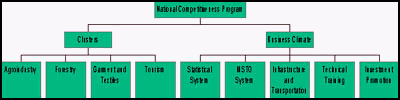
see graph
In Guatemala's case, the project is directed by a Directive Council, whose leader is the Vice president of the Republic, and coordinated in the public sector by the Minister of Economy and as associate coordinator, representing the private sector Mr. Danilo Siekavizza. The Minister of Agriculture and around 40 more entrepreneurs participate in this council, who in coordination with the Economic Cabinet, follow up on the project's development.
| Analytical Process |
Perhaps one of the most important contributions of the project is its analytical process, consisting in three phases. The first phase starts with a series of diagnostic studies on national and regional levels, in the different work areas, be it business climate or "cluster" analysis. In many cases the diagnostic is limited to the gathering and adaptation of previous studies to an adequate format to turn its ideas into a real work agenda. Then an international benchmarking is done. The benchmarking pursues that the performance of the area of study is close to the best existing practice worldwide. The idea is to leapfrog, eliminating intermediate stages in the critical work areas. With this information, recommendations are generated, and presented to the Competitiveness Council. The second phase consists of three steps. First, in coordination with PRONACOM, public and private sector leaders and other interest groups, a work agenda is developed. Then, the interested parties deliberate over the agenda until they reach consensus, which allows them to formalize the agenda with 3 or 4 specific projects. Once this process is concluded the Competitiveness Council, starts the third phase, conforming a Combined Work Commission, in which a public employee responsible in public administration of the issue and an entrepreneur, who may call a group of counselors for advice. This Combined Work Commission starts a scheduled process of implementation of the agenda. In the last stage of the third phase, the coordinators present a report of their achievements and problems to the Executive Committee, whose leader is the Vice-President. This is a self - evaluation process, of control and follow-up, but at the same time it becomes a support mechanism from the political apparatus, for the projects to continue to be implemented.
| Areas of Action |
The Program focuses on two different areas. The first one is "Business Climate" - These are areas that are considered important to change, in order to make Guatemala competitive in terms of investment attraction, productivity and international trade. This component implicates the short- term modification of aspects related to productive investment promotion and attraction strategy, improvement to the infrastructure and customs systems. The second one is "Cluster Strengthening". A cluster is a conglomerate of related industries that bases its competitiveness advantage in specialization and whose roots have developed randomly or reflect historic circumstances that make them excel world wide.
see table
1. Country and Sector Background
1. Main sector issues and Government strategy:
A- Weaknesses in International Competitiveness. The long-term aggregate indicators of the state of the Guatemalan economy in 1996, when the Peace Accords ended the country's long civil war, reflect the basic need to improve Guatemala's international competitiveness:
low per capita growth - very modest long run economic growth rates, combined with elevated population growth (2.9% over 1990-96 versus a benchmark 1.4% for lower-middle income countries), have yielded either declining GNP per capita (-0.9% over 1975-85) or only marginal gains (+0.6% over 1986-96);
low capital investment - gross domestic investment averaged a low 6.1% of GDP over 1986-96, while FDI inflows largely stagnated over 1992-97 at a low 0.5% of GDP ($84 million in 1997)---versus benchmarks of 1.1% for LAC and 3.1% in East Asia;
low integration with international markets - total goods and services exports/GDP ratios were virtually stagnant between 1992-97, amounting to only 18.5-19.0% which, when combined with import trends, yield an openness index which actually declined over the period from 46% to 44%;
low domestic content in exported products - the share of low value-added primary products in total exports (mainly coffee, sugar, bananas, petroleum, and cardamon) remained a high 84% in 1997, and were generated by relatively few producers. The ratio of manufacturing exports/GDP, which some consider as a rough proxy for a country's access to international learning and technology transfer and ability to produce at world standards, amounted to just 9% of total exports or 1% of GDP
B- Since 1996, efforts to build the economy in the post-conflict era have produced some encouraging initial results. Government investments in basic services---education, health, water and housing---rose notably and were reflected in improvements in a number of social welfare indicators. Access to basic infrastructure-power, roads and telecommunications---has increased largely through a combination of legislative action and privatization. Production of non-traditional agro-exports grew over 1996-98 by over 10% per annum and generated over US$300 million per year in export revenues (1998), mainly from vegetables, fruits and preserves, natural rubber, flowers, ornamental plants and sesame. In the manufacturing sector, maquila assembly of imported materials for re-export of textiles and clothing, which represent first-stage entry into international markets, now employs over 70,000 workers (1998) in mostly large garment manufacturers, textile mills and manufacturers of garment components.
C-. Still, a variety of indicators show that very strong efforts will be required to substantially boost social welfare. For example, the Global Competitiveness Index, prepared by the Center for International Development of Harvard University, ranked Guatemala 43rd among the 59 countries assessed. Its Competitiveness Index is built on the average of eight sub-indexes: openness, government, finance, infrastructure, technology, management, labor and institutions.
Though such a ranking should not be overemphasized, it brings out the fundamental weaknesses that must be addressed. Labor productivity is relatively low, relative to its Central American neighbors, and is particularly a reflection of low investment in worker skills, and inadequate technical and management training. The costs of transport, energy and telecommunications infrastructure are elevated. Product quality and certification systems are not available to most firms and seriously compromise product competitiveness in both local and international markets. Investment in information technology/connectivity, and adaptive product research and development for export markets are similarly low. The cost of capital from the financial sector reflects operating inefficiencies and inadequate competition. And, while import tariffs have been reduced to an average of around 9%, non-tariff barriers on imports remain significant, and export facilitation is relatively low
D- In the export sector, despite recent gains, executives of the Guatemala Export Promotion Agency (AGEXPRONT) indicate that the majority of the country's 3,000 smaller exporters (not to mention potential exporters) are inexperienced and lack practical understanding of market quality, price and delivery requirements. The maquila sector, which represents about three-quarters of the country's clothing exports to the USA and is operated frequently by large foreign investors, continues mostly to assemble imported components and has not yet internalized design, skills and technologies that would enable it to move up the value chain to higher income and more secure markets. Many maquila firms, which were attracted to Guatemala in part by the availability of US quota allocations and ten-year income tax incentives, now face the expiration of such incentives. These firms need to make steep investments in pre-commercial research and development, skills training and new market linkages to sustain growth , profitability and employment creation---or leave the country. | E-. In the formal small business sector, there is a wide imbalance in competitive factors in relation to Guatemala's larger firms. This sector represents the vast majority of businesses, provides the economic livelihood for over 75% of the labor force, accounts for at least one-third of GDP, and continues to grow in number---the number of formally and informally established small businesses tripled over the 30 years between 1964-94 to over 824,000 business units and is now estimated at nearly 1 million units. Source: the National Statistics Institute (IEN).
The Federation of Micro, Small and Medium Scale Businesses (FEPYME), in its report of March 1999, places the total closer to 700,000 units. Of these, about 290,000 firms were officially registered in Guatemala (including 65-70% in Guatemala City)---of which some 230,000 are small businesses consisting of some 190,000 microbusiness units with 0-4 employees and 40,000 small firms with 5-20 employees each. The remaining 350,000-400,000 units are found in the informal sector. A survey of 296 formal sector firms to help Project design identified several major firm-level constraints to competitiveness in Guatemala: See The Skills, Technology and Productivity Survey in Working Paper 1, elaborated with the support of the Bank, which covers a representative sample of 296 small, medium and large scale firms in the manufacturing and service sectors in metropolitan Guatemala City and in secondary cities.
The survey elicited information on employer-sponsored training and on a wide range of firms' attributes including size, industry, local or foreign ownership, equipment, technology, quality control systems, markets and exports, workforce characteristics, wages, subcontracting linkages and on production.
(i) the quality and cost of raw materials,
(ii) the quality and skills of workers (comparable severity among different sized firms),
(iii) the availability of workers,
(iv) access and cost of technology. Small businesses voiced a substantially greater severity of impact than large firms among these four production constraints identified by the survey.
F- For example, large firms employ on average 70 college graduates or college students (15% of their employees), whereas small businesses rely at best on one employee with such schooling. About one-half of businesses surveyed do not spend resources on research and development, with a clear relationship observed between firm size and the incidence of such investment (even for those that do, average spending is small---US$8,000-9,000, with large manufacturing companies spending only US$27,700). The use of information and communications technology (IT) is drastically different between small and very large firms for office administration (21% vs. 92%), production (19% vs. 68%) and quality control and testing (6% vs. 55%). Constraints to greater use of IT are due particularly to the cost of acquiring and maintaining it, the lack of qualified personnel and technical assistance to incorporate it, and a view that it has a poor return on investment. Subcontracting work, which could be an important market for small firms, is infrequent---only 3 businesses in 10 for industry and 2 in 10 for services use it---which is due mainly to limited knowledge about such options, a lack of product and process quality control by smaller firms, or a lack of production and price competitiveness.
G-. In the informal microbusiness sector, analyses indicate that, while capital shortages often head the list of problems among startup businesses, entrepreneurs in ongoing businesses most often define three other areas as highest priority:
(1) weaknesses in business skills,
(2) weak buyer-seller market linkages to higher purchasing power markets and related logistics, (3) low operating productivity, resulting particularly from disproportionately high prices for materials and supplies and a failure to take advantage of modern methods and production technologies.
Human capital constraints stem from a combination of modest formal education, the necessity of performing most key business functions in the absence of affordable outside help, and inadequate business training. Most micro-entrepreneurs have no training in small business management, and are either self-taught or have learned on-the-job usually in technical areas such as sewing, woodworking and masonry, to the almost total neglect of planning, purchasing, and other basic business management functions.
The costs and logistics of transportation to purchase materials and to deliver products are usually very significant. This is coupled with difficulties in communication and, for small formal sector businesses, a virtual absence of IT. Notwithstanding a desire to grow, most microbusinesses do not have a clear idea of how they want to expand their businesses or which assistance they need. Market signals from higher income markets---both domestic and international---are weak, as product promotion is almost always word-of-mouth and limits the entrepreneur to a small circle of community clients instead of taking advantage of growth opportunities through, for example, subcontracting with larger firms and international trade.
H- Government Strategy. A concerted strategy to raise international competitiveness crystallized in Guatemala when public and private sectors leaders united in 1997 with help at the regional level from the Central American Project for the Competitiveness and Sustainable Development (CLADCDS), a project started with the support of the Harvard Institute for International Development and Michael Porter, and coordinated by INCAE. This informal Government-business partnership, named the National Competitiveness Program (PRONACOM), has become a strong and well-recognized initiative which, in December 1999, became a legally constituted entity by Presidential decree.
PRONACOM is headed by the Vice President of the Republic, who is charged with facilitating the Program's agenda for improvement in the national business environment. PRONACOM is directed by an Executive Committee, consisting of the Vice President, the Minister of the Economy, a Private Sector Coordinator named by the Vice President, and two members of the private sector named by the Chamber of Industry of Guatemala and the Exporter's Association (AGEXPRONT), and others named by common agreement of its members. Its principal functions are to define PRONACOM's agenda and make decisions regarding program focus and management, and to make recommendations to the Government on public policy and institutional matters. Day-to-day management and technical support for PRONACOM is the responsibility of the PRONACOM Management Team. It is anchored in the Ministry of Economy and consists of a five-member team led by an Executive Director with rank of Vice-Minister.
I- PRONACOM's strategy since mid-1998 has focused on three levels:
the business environment - changes at the macro-level in selected laws, regulations and institutions influencing business investment and operating performance;
(ii) cluster development programs - support at the mezzo-level for the process and substance of cluster initiatives to stimulate new international competitiveness programs among firms and business associations;
(iii) firm-level support programs - facilitation at the micro-level to promote specific investments to increase competitiveness.
PRONACOM's work program has involved vigorous analysis of various business environment issues with the assistance of the Japan PHRD Grant administered by the Bank. It has used cluster concepts to both facilitate development of a basic knowledge base on competitive strengths and weaknesses---to date in textiles and clothing, 3 agro-business lines, tourism and forestry---and to raise public awareness in Guatemala of competitiveness issues, in part by sponsoring training by local consultants and universities of over 200 people in the cluster methodology. This has been reinforced by participation of PRONACOM and senior public officials in various national, regional and international fora (such as in Costa Rica at INCAE to an audience of Presidents from Central America and, most recently, at the Cluster Conference in Varese, Italy to an audience of over 26 country representatives).
2. Objectives
Project development objective and key performance indicators
Objective. The purpose of the Guatemala National Competitiveness Program (PRONACOM), a public-private partnership launched in 1998 under the Vice President of the Republic, is to advance the nation's international competitive standing and accelerate its economic growth. As part of this Program, the proposed Project would help to develop micro- and small businesses, including those found in smaller towns outside of Guatemala City where women and indigenous people play a particularly important role, as a vehicle to help implement the Peace Accords Especially the two Accords on the Identity and Rights of the Indigenous People (March 31, 1995, Mexico City) and on Socioeconomic Aspects and the Agrarian Situation (May 6, 1996, Mexico City). and reduce high rates of poverty and economic inequity in Guatemala. To do so, the proposed Project would support a diversified and mutually reinforcing set of initiatives on two levels:
(a) in the business environment - seek to increase the competitiveness of product and factor markets via regulatory changes and new public-private institutional partnerships. This component would entail selective interventions in the following areas: (i) domestic competition, (ii) foreign investment and trade, (iii) in-firm skills training; and (iv) product quality technology infrastructure. It is intended to motivate and facilitate larger firms to increase efficiency and build international market linkages; much of it should also have a strong enabling effect on small business growth;
(b) at the firm level - aim to broaden small business participation in entrepreneurship and national economic growth via the expansion of sustainable business development services (BDS). This would involve (i) promoting increased investment in firm-level pre-competitive learning and innovation, (ii) piloting service and delivery innovation in information technology-based BDS, and (iii) expanding business development clusters and social responsibility. This program would also help activate and accelerate a supply response to the business environment changes sought under the Project.
3. Rationale for Bank's Involvement
The PRONACOM Executive Committee and Bank view the Bank's main role to date as helping to
(i) leverage the existing cluster work by increasing analytical work, cross-country experience and internal dialogue on key cross-cluster policy and institutional development issues,
(ii) ensure that the PRONACOM agenda is closely linked with social objectives, and that policy/institutional analyses and program development incorporate the interests of a wide spectrum of socio-economic groups in Guatemala.
The Bank is also helping to strengthen the PRONACOM processes---particularly in deepening public-private cooperation and expanding public and private sector involvement in the PRONACOM.
4. Description
Increasing domestic market competition - advisory services, training programs and study tours, office facilities, equipment and materials, information dissemination and recurrent cost support on a declining basis to implement a Competitiveness Commission Institutional
Development Plan over 3 years to help
(i) adopt a competition law,
(ii) establish the functional capacity of the Competition Commission,
(iii) execute a public information and voluntary compliance promotion program,
(iv) carry out an agreed program of investigations, advocacy and enforcement of the competition law.
Accelerating foreign investment and trade - advisory services, training programs and study tours, office facilities, equipment and materials, FDI promotion programs and recurrent operating costs on a declining basis
(i) to implement an FDI Institutional Development Plan over 4 years to upgrade PROGUAT into an effective public-private FDI promotion agency and improve one-stop investment facilitation;
(ii) prepare a new FTZ legal framework and privatize the ZOLIC zone;
(iii) prepare a new legal framework for maritime transport.
Expanding in-firm skills training markets - advisory services, training programs and materials, facilities upgrading, equipment, information dissemination and recurrent cost support on a declining basis to help implement a Skill Training Market Development Plan to
(i) adjust the regulatory framework to create the National Training Council and reform the payroll-levy management system,
(ii) establish a private training providers accreditation program,
(iii) implement an in-firm training promotion and extension services program for small business,
(iv) upgrade public technical skills and equipment to respond effectively to the new system.
Upgrading firm product and process quality - advisory and institutional twinning services, training and study tours, quality promotion programs, information, accreditation and certification services, and recurrent cost support on a declining basis to help implement a National Quality System Development Plan to
(i) promote quality awareness, and provide training in quality assurance practices & in ISO 9000 & 14001 assessment,
(ii) establish an SCA international information center,
(iii) establish an internationally recognized laboratory accreditation system,
(iv) certify non-traditional activities such as sustainable tropical wood exports, eco-tourism and cultural sites, and factory working conditions in maquila industries
Increasing firm investments in learning and innovation - promote increased pre-competitive investments by
(i) establishing a temporary Competitiveness Learning and Innovation Program to provide
(a) under agreed firm competitiveness plans, 50-50 matching grant financing to enterprises, associations and clusters on an individually-approved basis,
(b) voucher grant financing for low-income microbusinesses;
(c) a Program client assistance and management contract to promote the value of BDS & the program; assist clients to develop competitiveness plans, select service providers & implement the plan; and administer approvals and disbursement of funds; and
(ii) piloting through Guatemala Micro Net IT-based BDS to help low-income micro- and small businesses to raise earnings by increasing their business skills, market access and operational competitiveness.
Expanding the competitiveness-building process - advisory services, training programs and materials, and information dissemination to support
(iii) a program to promote new business clusters and carry out cross-cluster business environment diagnostics,
(iv) help develop business social responsibility to support small business development. PRONACOM Management Unit
5. Financing
| | Total ( US$m) | | Government | 0 | | IBRD | 10 | | IDA | | | Total Project Cost | 10 |
6. Implementation.
A- Institutional and implementation arrangements. The Executive Committee of PRONACOM, a public-private partnership, has exercised strong leadership and closely collaborated with the Bank in the design of the Project. It would continue to play this role in the implementation phase by having overall responsibility for its execution, as well as the evaluation of progress and impact against agreed targets. The Project would be managed by the PRONACOM Management Unit, which already exists and reports to the Executive Committee. This Unit, which is physically housed in the Ministry of Economy, has developed a strong implementation management capacity and has operated efficiently since late 1998. It has gained this capacity through considerable experience in implementing the PRONACOM program and in collaboration with the Bank in the execution of the Project' s PHRD Grant, include with respect to Bank procurement and financial management practices.
B-. To implement the Project, the Management Unit would be expanded from its current five full-time and one part-time staff members These staff currently have specific or shared responsibilities for day-to-day PRONACOM management, cluster development, coordination on business environment issues, and the national quality system. by adding three additional specialists coordinators for the areas of domestic competition, foreign investment/international supply chain, and in-firm skills training. Since it is critical that the Management Unit be fully operative from the start of Project implementation, the staffing of the Unit and creation of the Supervisory Committee within the Unit, satisfactory to the Bank, would be a condition of loan effectiveness. For business environment issues, Management Unit staff would work in a fully integrated fashion (as it has in the past) with the Ministry of Economy, which has portfolio responsibility The Ministry has first-line responsibility for competition policy, foreign direct investment and trade, product quality technology infrastructure, micro and small business, and supporting responsibility for in-firm training and maritime transport. for all Project components. At the outset, staff responsibilities would involve leading day-to-day efforts under the aegis of PRONACOM and with counterparts to upgrade public policy and institutional frameworks based upon the Development Plans prepared---either building upon existing entities (the PROGUAT and FTZ Units of the Ministry of Economy, INTECAP, COGUANOR), or developing new ones (the Competition Commission). As these entities gain new regulatory identify and are staffed, the role of the Management Unit would progressively shift increasingly to procurement support, financial management, monitoring and reporting, and to impact evaluation.
C- Regarding firm-level Project activities, an independent private contractor would be hired to provide client assistance and manage the Competitiveness Learning and Innovation Program and would report to a Supervisory Committee within the PRONACOM Management Unit. Implementation of the Guatemala MicroNet pilot would be led initially by the Management Unit to help complete pre-startup preparations, after which it would support a dedicated management team hired under the business plan. The business cluster and social responsibility program would be directed by the Management Unit as a continuation of its work over the past two years on PRONACOM's four existing cluster programs.
D- The core support service responsibilities of the Management Unit for Project implementation would include the following: · Carry out the Project Launch Plan for 2000;· Perform all Project procurement functions according to the Bank's Guidelines in coordination with Project institutions;· Perform all Project financial management functions, including management of Bank loan disbursements;· Prepare annually by November 30, with inputs from Project institutions and in agreement with the Bank, Annual Action Plans for the years 2001-2004;· Prepare Quarterly Project Monitoring and Evaluation Reports on execution and impact against agreed institutional development and other performance targets. Quarterly reports would include financial management reporting used to monitor progress and future disbursements;· Hold a Project Mid-term Review by June 30, 2002;· Ensure general Project coordination between PRONACOM, the Ministry of Economy, and other entities involved in Project execution; and· Prepare the borrower's portion of the Project Implementation Completion Report in coordination with the managing agencies
.3. Project Financial management. The Management Team would manage Project funds under a Project-specific financial management system for accounting, reporting, and auditing. This system, to be defined in a Project Manual of Administrative-Financial Procedures [to be prepared], would cover financial management responsibilities, procedures, documentary formats for use of the Special Account, procurement of goods and services, the Integrated Accounting System, internal documentary controls and inventory controls over office equipment and supplies. The accounting and auditing practices, standards and controls, and reporting format and content defined in the Manual would meet those defined in International Accounting Standards of the International Accounting Standards Committee and be consistent with the Bank's Financial Accounting, Reporting and Auditing Handbook (FARAH).
4. Auditing of Project accounts would be carried out by an independent private sector firm acceptable to the Bank. A specific shortlist of such firms for the Project would be prepared and reviewed by the Bank for its no-objection. A long-term contract for the life of the project, subject to annual performance acceptable to the Bank, would be concluded for Project auditing services with the firm selected. Terms of reference for such audits would be prepared and agreed upon in accordance with Bank model TORs, covering statements of income and expenses, all sources and uses of project funds and comparisons with the Bank's Project Appraisal Document, assets and liabilities, SOEs, Special Account, internal control system, conformity with the Bank's Loan Agreement. Audit work would begin at the Project's startup to confirm the auditability of the financial management system. Audit reports would be submitted within 4 months following the end of the fiscal year. The costs of such annual audits are incremental costs and would be included in project costs and Bank financing. This financial management system would conform to the Bank's requirements under BP10.02.
As a condition of loan effectiveness, the Government would have put into operation a system, satisfactory to the Bank, for the administrative, financial and accounting control of the Project which meets
(i) the Bank's minimum project financial management requirements, or
(ii) the Bank's higher standard for such management under the Loan Administration Chang Initiative (LACI).Project Monitoring and Evaluation.
The Management Team would be responsible for Project monitoring and evaluation of progress toward project development objectives and use the Project Design Summary in Annex 1 as a basis to track the key Project inputs, processes, outputs and outcome/impact. A data collection system would be prepared for this purpose, which would utilize a baseline data set from the 296 firm-level survey prepared at Project identification as a control group and " barameter" of project progress. These same firms would be tracked at the mid-point and end of the Project and their evaluation data compared with similar evaluations of firms participating in the Project.
The Management Team would utilize the system to
(i) prepare quarterly Project Monitoring and Evaluation Reports on execution and impact against agreed performance targets,
(ii) prepare annually by November 30 of 2001-2004 an Annual Action Operating Plan for the following year with inputs from the Managing Agencies,
(iii) hold a Project Midterm Review by June 30, 2002.
While the Management Team itself would be responsible for monitoring implementation activities and outputs, a qualified local firm would be responsible for preparing within this reporting system a regular independent evaluation of Project outcome and impact.
7. Sustainability
The design of the business environment reforms has been highly participatory with both the public and private sectors. While further dialogue is needed in the next stages of loan processing with the new Government administration at a detailed level, the commitment voiced in initial discussions along with continuity in the private sector's involvment suggests that there is a good possibility of sustained momentum under the implementation phase of the Project and of meeting its institutional development goals.
The Competitiveness Learning and Innovation Program is not intended to be sustained. It has a defined exit policy, deliberately making it a temporary one-time efforts to reduce market failures. However, experience elsewhere with mechanisms of this kind show that they are likely to create three sustainable effects:
(i) having helped firms to meet the usually high costs of pre-commercial learning, particularly for entry into the export market, they encourage a durable commitment to new markets as long as operating costs are covered;
(ii) having introduced firms to the benefits of using business development services, firms tend to recognize their full value and no longer need subsidies to motivate their use;
(iii) they encourage development of a local market of entrepreneurial learning and businesses support.
8. Lessons learned from past operations in the country/sector 3.
The Project concept addresses policies and issues which are well known through cross-country analyses and other sources to have strong bearing on international competitiveness. The approach to each component---the issues to be addressed and methodology to be used---reflect a blend of specific problems identified in discussions with the Government and in cluster work, and the cumulative experience of the Bank and other development partners in these areas. In general, the Project's approach to programs and institutional development relies very much on demand-driven resource allocation and decentralized, participatory delivery mechanisms, which have tended to work far better in meeting needs at the firm-level to increasing competitiveness. Like the El Salvador Competitiveness Enhancement Project, the emphasis is on specific changes in the regulatory environment, facilitating public or public-private partnerships and firm-level help. The Project at entry is targeted to achieve early public policy changes and launch institutional support systems to build firm-level competitiveness, as well as progressively expanding business cluster and social responsibility development programs.
9. Program of Targeted Intervention (PTI) N
10. Environment Aspects (including any public consultation)
Issues: The Project would provide support for training in the application of ISO 14,000 environmental management practices, development of a system to certify environmental conformity to ISO 14000, and training of qualified assessors to perform this task. Part of the application of this system is developing internationally recognized standards, assessment and certification for eco-tourism and cultural heritage facilities.Under the Product Standards component, the Project would respond to requests from the private sector for the provision of training in the application of ISO 14,000 environmental management practices, development of a system will be established to certify environmental conformity to ISO 14000, and training of qualified assessors to perform this task. Part of the application of this system is expected to be an explicit system to develop internationally recognized standards, assessment and certification for eco-tourism and cultural heritage facilities.
11. Contact Point:
Task Manager
James C. Hanna
The World Bank
1818 H Street, NW
Washington D.C. 20433
12. For information on other project related documents contact:
The InfoShop
The World Bank
1818 H Street, NW
Washington, D.C. 20433
Telephone: (202) 458-5454
Fax: (202) 522-1500
Web: http:// www.worldbank.org/infoshop
Note: This is information on an evolving project. Certain components may not be necessarily included in the final project.
PID processed by the InfoShop week ending March 17, 2000. |
GUATEMALA: NET INCOME OF FOREIGN INVESTMENT, (1990-1998)
(Million of dollars and percentage)
| Year | Net Income | Variation Percentual | Participation in the Formation of Net Capital | GDD Participation | | 1990 | 59 | -4.8 | 7.63 | 0.78 | | 1991 | 91 | 54.2 | 9.73 | 0.97 | | 1992 | 94 | 3.3 | 7.18 | 0.91 | | 1993 | 138 | 46.8 | 9.13 | 1.22 | | 1994 | 65 | -52.9 | 4.31 | 0.50 | | 1995 | 75 | 15.4 | 4.28 | 0.51 | | 1996 | 77 | 2.7 | 4.54 | 0.49 | | 1997 | 85 | 10.4 | 4.38 | 0.48 | | 1998 | 673 | 691.8 | 29.08 | 3.77 | | Source: Bank of Guatemala 1999 |
|
 |
Project Name Guatemala-Competitive
Region Latin America and Caribbean Region
Sector Institutional Development; Privatization
Project ID GTPE55084
Borrower(s) GOVERNMENT OF GUATEMALA
Implementing Agency Address NATIONAL COMPETITIVENESS PROGRAM/MINISTRY OF ECONOMY
Address: Ministry of Economy
Contact Person: Dr. Emmanuel Seidner
Environment Category C
Date PID Prepared March 14, 2000
Projected Appraisal Date May 10, 2000
Projected Board Date July 6, 2000 |
|
© World INvestment NEws, 2001.
This is the electronic edition of the special country report on Guatemala published in Forbes Global Magazine.
June 11th, 2001 Issue.
Developed by AgenciaE.Tv |
|
|
| | | | |
| |
|