19
www.ebizguides.com
General Information
that run from east to west with a narrow belt on the
Pacific Ocean of a width of less than 24 kilometers
(less than 15 miles). There are some high elevations
in the extreme northeast. The plain has an average
altitude of 610 meters (about 2,000 feet). The highest
elevation in the republic is the Santa Ana volcano at
2,385 meters (7,825 feet) above sea level. El Salvador
is known for its volcanoes, the main ones being:
llamatepec (Santa Ana), Chichontepec (San Vicente),
Quezaltepec (San Salvador), Chaparrastique (San
Miguel), and Izalco known, until recently, as the
Lighthouse of the Pacific. Earthquakes and volcanic
eruptions are common.
The country is a hub for travelers and cargo en
route from North America to South America and
vice versa. The Panamerican highway crosses El
Salvador connecting San Salvador, the capital city,
with the land borders of Guatemala and Honduras.
Some other important highways are Carretera Del
Litoral - (Coastal Highway), built in the 50’s, that
runs parallel to the Pacific Ocean; and the Carretera
Troncal Del Norte (North Branch Highway), that
connects the capital city with Chalatenango.
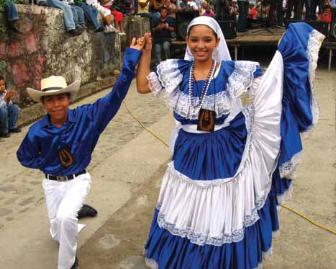
The people are the best “natural” resource of El Salvador (Mitur)
Natural Resources
Agriculture is the main natural resource. Among the
minerals are gold, silver, limestone and gypsum.
There are also trees that have commercial value
such as oak, cedar and mahogany.
Flora and Fauna
The mountains of El Salvador have templed
vegetation and low forest of oaks and pines. The
natural vegetation of the rest of the country consists
of deciduous trees and sub-tropical vegetation.
There is an abundance of tropical fruit and medicinal
plants.
The fauna of El Salvador is less varied and rich
than other Central American countries due to high
population density, however there are monkeys,
coyotes, jaguars, pumas and ocelots. Among the
reptiles are iguanas and boas.