206
Tourism Industry
National Park. The government also will work to
promote tourism, product development, and human
skills development.
The tourism private sector is made up of a number
of enterprises, which have voluntarily grouped them-
selves into a number of associations ranging from
tour operators and travel agents to safari outfitters
and rental car companies. They are all under the
umbrella of the Tourism Council of Zambia (TCZ).
The Tourism Civil Society is made up of Non-Gov-
ernmental Organizations (NGO’s) and Community
Based Organization (CBO’s) operating in the field
of tourism. Some local communities operate in the
form of Community Resources Boards or Commu-
nity Trusts with the patronage of traditional leaders.
Tourism dev
el
opment
The government, in an effort to guide tourism devel-
opment and promote sustainable tourism, has pro-
duced a comprehensive Tourism Policy for Zambia.
This policy guides and drives development in the
sector, which has led to the formulation of legislation
and regulations to ensure the orderly development
of the sector. Policies are formulated, reviewed, and
monitored through the Department of Tourism, which
is one of the sector’s key technical departments and
statutory bodies. Community investment and par-
ticipation in the preservation and conservation of
OVERVIEW
Zambia’s tourism sector has seen enormous growth
in recent years. Generally characterized by a large
number of unspoiled and pristine wilderness areas,
Zambia embodies what most visitors imagine when
thinking about Africa.
Investment in tourism has grown steadily over the
years. Most investment has been directed towards
tourist accommodations. Investment has also been
heavily directed towards wildlife tourism and newer
subsectors such as conference hosting and heri-
tage/safari hunting operations.
Zambia’s emphasis on developing the tourism sector
can be clearly seen through the amount of govern-
ment expenditures directed towards such areas as
infrastructure—particularly in the development of
roads, airports, and other support infrastructures.
Zambia has continued to prioritize tourism, as it is
the second largest contributor to the Zambian econ-
omy after agriculture. Tourism has, therefore, acted
as a catalyst for economic development throughout
the country, especially in rural areas where most
tourism attractions can be found.
The government will continue to focus its develop-
ment of the sector on expanding tourism infrastruc-
ture in popular tourist areas including the greater
Livingstone area, the Northern Circuit, and Kafue
Credit: The Inzy Company
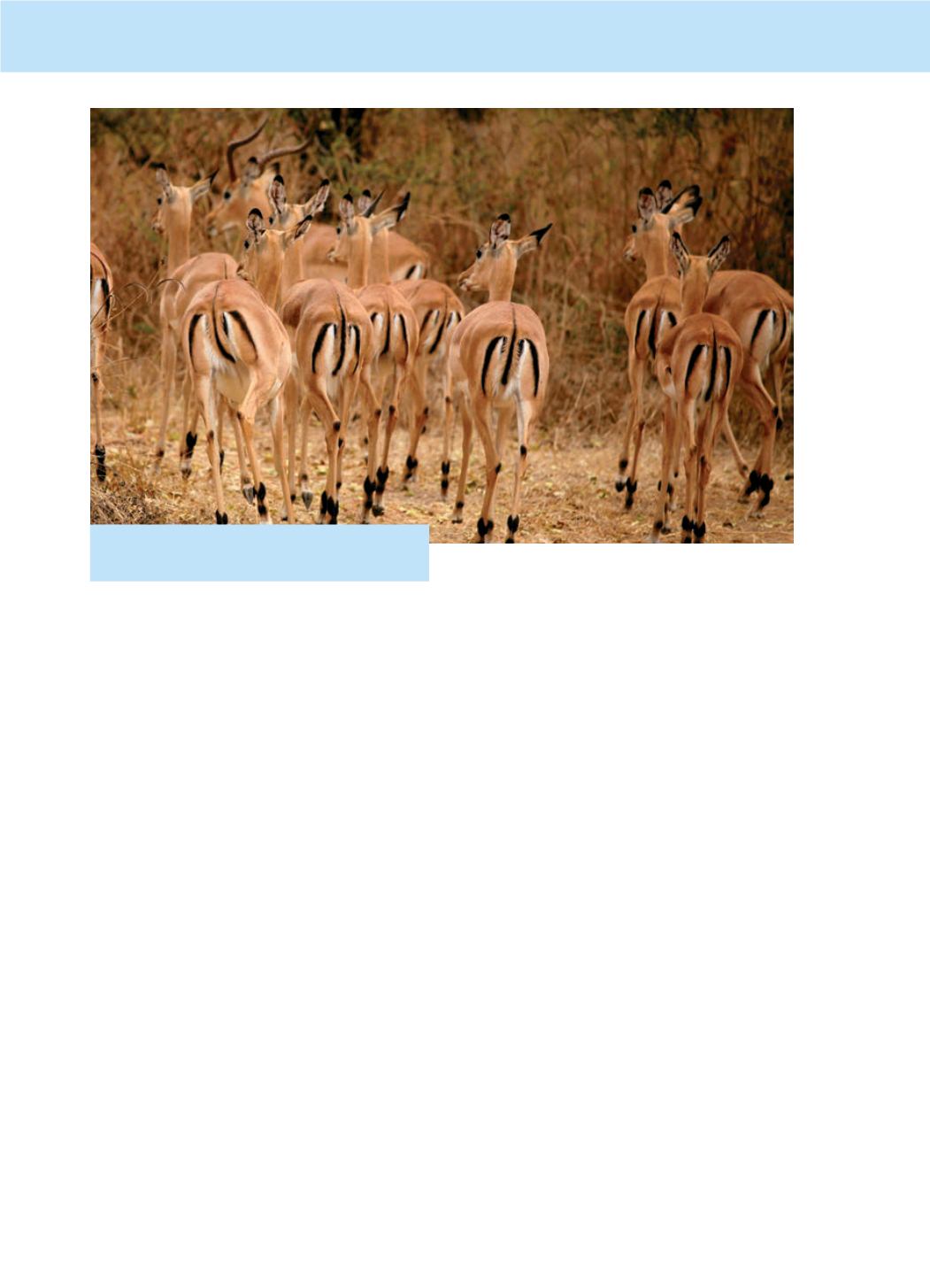
Impalas are one of many wildlife species to
be seen in Zambia


